PRP Therapy vs. Prolotherapy
Which Is Right for Your Pain?
The main difference is what is injected. PRP delivers concentrated growth factors from your own blood, while prolotherapy uses an irritant solution, usually dextrose, to start the body's healing response. Both are regenerative injections for joint, tendon and ligament pain, and results vary.
If you live with joint, tendon, or ligament pain that has not improved with rest, therapy, or medication, you may have heard about two regenerative injection options: PRP therapy and prolotherapy. Both aim to help the body repair damaged tissue, but they work in different ways and suit different problems.
This guide explains how each treatment works, where they overlap, how they differ, and how to decide with your physician. It is educational and does not replace a medical evaluation.
The Two Treatments at a Glance
| PRP Therapy | Prolotherapy | |
|---|---|---|
| What is injected | Platelet-rich plasma from your own blood | Dextrose or another irritant solution |
| How it works | Delivers concentrated growth factors to the injured area | Triggers a mild inflammatory response to prompt repair |
| Blood draw needed | Yes | No |
| Best known for | Tendon injuries, joint pain, early to moderate arthritis | Ligament laxity, joint instability, chronic tendon and back pain |
| Typical number of sessions | Often 1 to 3 | Often several, spaced weeks apart |
| Office visit length | Longer, because blood is drawn and processed | Shorter |
| Typical downtime | Short; activity is usually limited for a few days | Short; soreness for a few days is common |
| Common side effects | Temporary soreness, swelling, bruising | Temporary soreness, stiffness, swelling |
PRP (Platelet-Rich Plasma) Therapy
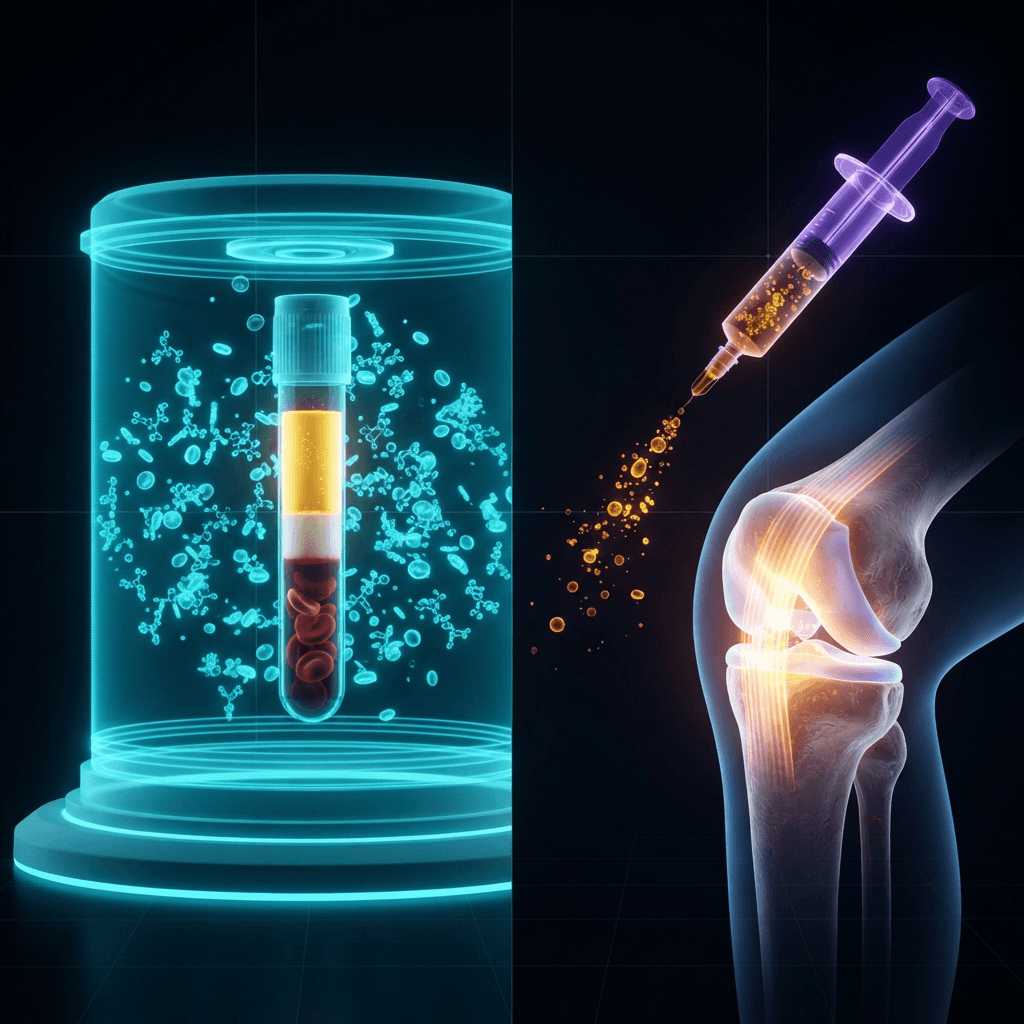
PRP therapy uses a concentrated sample of your own blood platelets to support healing in an injured area. Platelets carry growth factors, which are proteins involved in tissue repair.
Because PRP treatment uses your own blood, the risk of an allergic reaction to the injected material is low.

How PRP Works in Three Steps
From a simple blood draw to a precisely placed injection.
Blood draw
A small amount of blood is drawn from your arm.
Centrifuge
The blood is spun in a centrifuge to concentrate the platelets.
Injection
The platelet-rich plasma is injected into or around the painful joint, tendon, or ligament, often with ultrasound guidance for accuracy.
PRP Therapy Pros
- Uses your own blood, so the risk of allergic reaction to the injected material is low
- Often needs fewer sessions than prolotherapy
- Well studied for knee osteoarthritis and certain tendon problems
- Minimally invasive, with a short recovery and no surgery
PRP Therapy Cons
- Requires a blood draw and processing, so visits take longer
- Evidence is mixed for some conditions, and PRP preparations vary
- Insurance coverage varies and may be limited, so out-of-pocket cost can apply
- Soreness and swelling are common for a few days afterward
Prolotherapy
Prolotherapy injects an irritant solution, most commonly a dextrose (sugar) solution, into weakened ligaments, tendons, or joint areas. The goal is to trigger a mild, controlled inflammatory response that prompts the body to start its own repair process.
What the Visit Looks Like
Done in the office. Your physician identifies areas of ligament or tendon laxity, then places a series of small injections at those sites.
Local anesthetic is often included to improve comfort, and ultrasound guidance may be used.
It typically involves a series of sessions spaced several weeks apart rather than a single visit.
Prolotherapy Pros
- Targets weak ligaments and unstable joints, which PRP is less often used for
- No blood draw, and the solution is simple and widely available
- Shorter office visits
- Cost per session is often lower, though total cost depends on how many sessions you need
Prolotherapy Cons
- Usually needs several sessions spaced weeks apart
- Research quality varies, and larger trials are still needed
- Temporary soreness and stiffness are common after injections
- Results build gradually and are not guaranteed
What Each Treatment Is Used For
Both treatments are used for musculoskeletal pain, and the overlap is large. Your physician chooses based on the structure that is injured and how it is damaged.
PRP is commonly considered for
- Tendon problems such as tennis elbow, golfer's elbow, and rotator cuff tendinopathy
- Knee osteoarthritis
- Patellar and Achilles tendon pain
- Some muscle and ligament injuries
Prolotherapy is commonly considered for
- Lower back and sacroiliac joint pain linked to ligament weakness
- Joint instability and chronic sprains
- Knee, shoulder, and hip pain
- Chronic tendon pain that has not responded to other care
Some patients are good candidates for either one, and a physical exam and imaging help narrow the choice.
What to Expect
Neither treatment requires surgery or a hospital stay, and most patients go home the same day.
Before treatment
Your physician reviews your history and imaging. You may be asked to pause anti-inflammatory medications such as ibuprofen or naproxen for a period before treatment. Follow the instructions you are given.
During treatment
The area is cleaned and numbed. For PRP, blood is drawn and processed first. The injection is then placed with precision, often under ultrasound.
After treatment
Soreness and swelling at the site are common for a few days. Most patients return to light daily activity quickly and ease back into exercise as directed.
How Long Until Results, and What the Research Says
Both treatments work gradually because they support the body's own repair process. Many patients notice change over several weeks to a few months, not days. Results vary from person to person.
The evidence for both treatments is promising but still developing, and it is stronger for some conditions than others.

PRP Research
Studies are most encouraging for knee osteoarthritis and certain tendon problems such as tennis elbow. Results are more mixed for other conditions, and PRP preparations differ in how they are made, which makes studies hard to compare.
Prolotherapy Research
Some trials report improvement in knee osteoarthritis, tendon pain, and chronic low back pain. Study quality varies, and larger, well-designed trials are still needed.
An honest note: Neither treatment is a guaranteed cure, and neither works for everyone. A good provider will tell you that plainly.
Risks and Safety
Risks for both treatments are uncommon and generally mild. They include:
Tell your physician if you take blood thinners, have a bleeding disorder, have an active infection, or are pregnant.
How to Choose
The right choice depends on what is injured, how long you have had symptoms, and your goals. Questions to discuss with your physician:
- Is the pain coming from a tendon, a ligament, or a joint surface?
- Do imaging and exam point to damaged tissue, loose ligaments, or both?
- How many visits can you commit to?
- Have you already tried physical therapy, medication, or other injections?
- Do you have health conditions or medications that affect your options?
Which May Be Favored
PRP may be favored when a tendon or joint needs concentrated growth factors. Prolotherapy may be favored when ligament weakness or instability is driving the pain. In some cases the two are combined or used one after the other.
Who may not be a candidate?
A person may not be a candidate if they have an active infection at the site, a bleeding or blood disorder, or certain other conditions. Insurance coverage for both treatments varies, so ask our team about costs before beginning.
Frequently Asked Questions
Is PRP or prolotherapy better?
Neither is better for everyone. The better option depends on your diagnosis, the tissue involved, and your goals.
Do the injections hurt?
Most patients report brief discomfort. The area is numbed first, and soreness afterward usually settles within a few days.
How many treatments will I need?
PRP often takes fewer sessions than prolotherapy, but the plan depends on your condition and how you respond.
Can I have both?
Yes, in some cases. PRP and prolotherapy can sometimes be used together or in sequence for the same problem area.
When will I feel better?
Both treatments work gradually. Many patients notice improvement over several weeks to a few months.
Start With an Accurate Diagnosis
Choosing between PRP and prolotherapy starts with knowing exactly what is causing your pain. Queens Pain Clinic physicians will review your history and imaging, explain your options, and build a plan around your goals.
9701 66th Ave, Rego Park, NY 11374
Mon, Tue, Thu, Fri 9:00 am - 6:00 pm | Sun 9:00 am - 3:00 pm | Closed Wed and Sat
Medical disclaimer: This article is for general education and is not medical advice. Please consult a qualified physician about your condition and treatment options.