Spinal Injections for Pain Management
Spinal injections are image-guided procedures that place anti-inflammatory medicine next to an irritated spinal nerve or joint. They reduce back, neck, arm and leg pain, help confirm where pain comes from, and make physical therapy easier. They do not cure the underlying condition, and relief lasts from days to several months.
Spinal injections are image-guided procedures that place anti-inflammatory medicine, usually a corticosteroid with a local anesthetic, next to an irritated spinal nerve or joint. They are used to reduce back, neck, arm and leg pain, to confirm where pain is coming from, and to make physical therapy easier. They do not cure the underlying condition, and relief varies from days to several months.
Key Facts at a Glance
- Done in a procedure room, usually as an outpatient visit lasting about 15 to 30 minutes.
- A thin needle is guided with live X-ray (fluoroscopy), ultrasound or CT.
- A corticosteroid, a local anesthetic, or both may be injected.
- Best results when combined with an active rehabilitation plan.

Medical disclaimer: This page is general education, not personal medical advice. Talk with your doctor about new or worsening pain before starting any new treatment. Reviewed by Queens Pain Management Clinic physicians, Oct 12, 2026.
What injections can and cannot do
What they can do
- Reduce nerve and joint inflammation.
- Lower pain enough to participate in rehabilitation.
- Help identify the pain generator.
- In some cases help people avoid or delay surgery.
What they cannot do
- Repair a disc.
- Reverse arthritis or narrowing of the spinal canal.
- Guarantee lasting relief.
Evidence note: Research shows the most consistent short-term benefit for radiating (radicular) pain from a disc problem. Evidence is weaker for general low back pain and for long-term benefit in spinal stenosis, which is why careful patient selection matters.
Types of spinal injection
A spinal injection is usually considered when pain has lasted several weeks, is limiting daily activity or sleep, and has not improved enough with rest, medication and physical therapy. Imaging (MRI or CT) and a physical exam should match the pain pattern before an injection is chosen.
Epidural steroid injection (cervical, thoracic, lumbar, caudal)
Facet joint injection and medial branch block
Selective nerve root block
Sacroiliac (SI) joint injection
Epidural steroid injections
The epidural space is a fat-filled compartment inside the spinal canal that surrounds the nerve roots and the protective sac that holds spinal fluid. When a disc bulges, a nerve is squeezed by narrowing of the canal, or the nerve becomes chemically irritated, the nerve swells and sends pain, tingling or weakness down an arm or leg. A steroid placed nearby calms that inflammation.
Three approaches
Interlaminar
How it reaches the epidural space: Between two vertebrae, from the back
Often chosen when: Pain affects a wider area or both sides
Transforaminal
How it reaches the epidural space: Through the opening where the nerve exits
Often chosen when: Pain follows one specific nerve root
Caudal
How it reaches the epidural space: Through the sacral hiatus at the base of the spine
Often chosen when: Lower lumbar or sacral pain, or after prior spine surgery
Conditions commonly treated
- Lumbar or cervical radiculopathy (a pinched or irritated nerve)
- Herniated or bulging disc
- Sciatica
- Spinal stenosis
- Degenerative disc disease with nerve irritation
- Pain after spine surgery, in selected cases
Effectiveness: What the Evidence Says
Studies show ESIs can provide short-term relief of radiating pain, especially when a disc herniation is irritating a nerve. The benefit is less certain for pain confined to the low back alone, and long-term effects on the need for surgery are mixed. For this reason, we recommend an ESI as one part of a broader plan that includes exercise-based rehabilitation.
Facet joint injections and medial branch blocks
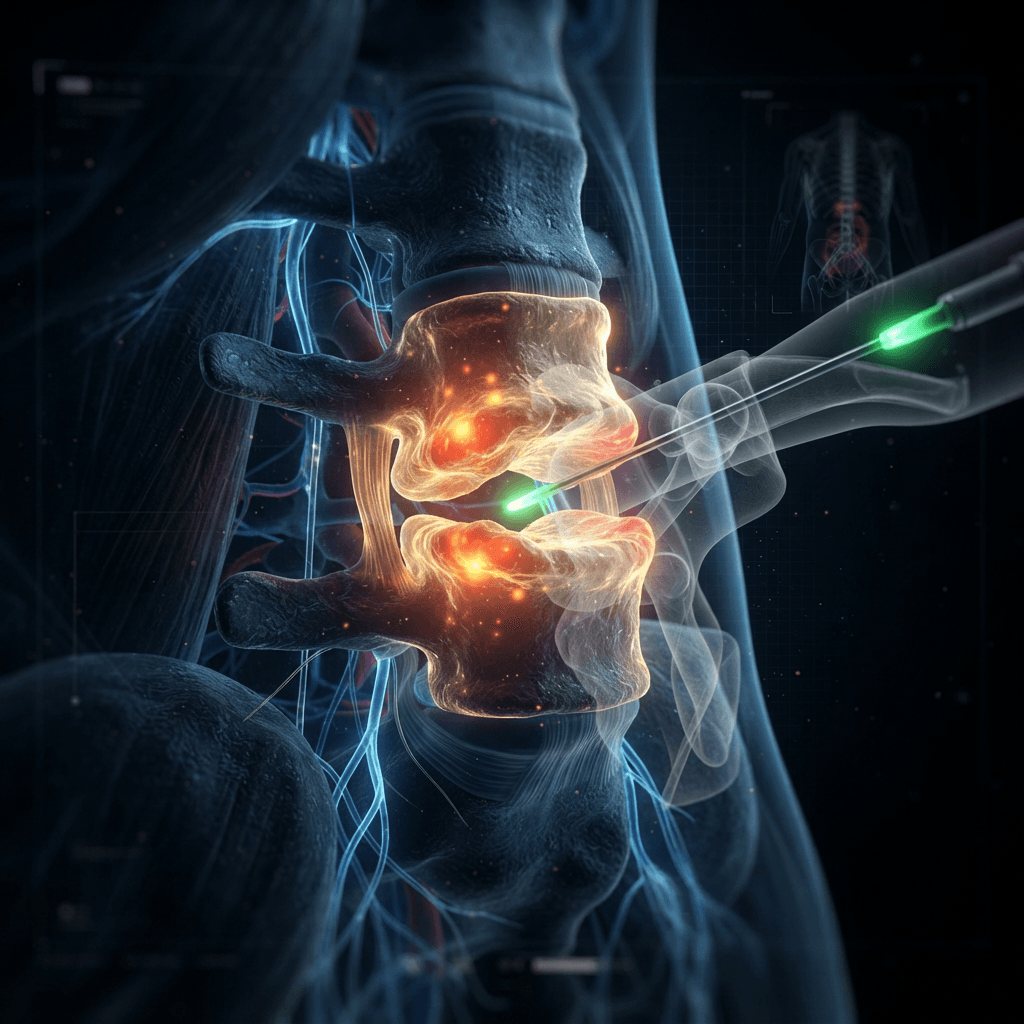
Facet joints are paired joints on each side of every vertebra. They guide and limit spinal motion and carry load. Like knees and hips, they can develop arthritis, which causes pain that is typically felt in the back or neck and can refer to the buttock, upper thigh or shoulder. Facet pain usually does not travel below the knee.
Facet Pain: Common Signs
- Dull, aching pain in the lower back or neck, often one-sided
- Worse with leaning backward, twisting or standing for long periods
- Morning stiffness that eases with movement
- Tenderness over the joint and no clear nerve-root symptoms such as numbness or weakness
Facet joint injection
Steroid and anesthetic placed in or beside the joint
Purpose: Treatment and diagnosis
Duration: Weeks to months
Medial branch block
Anesthetic placed next to the small nerves that carry pain from the joint
Purpose: Diagnosis, with temporary relief
Duration: Hours to days; steroid is not always used
Radiofrequency ablation (RFA)
Heat from a needle disrupts the pain-carrying medial branch nerves
Purpose: Longer-term treatment after positive blocks
Duration: Often 6 to 12 months; nerves can regrow, and the procedure can be repeated
Why two blocks before ablation?
Because one block can give a false positive, many guidelines and insurers require two separate diagnostic medial branch blocks with a defined level of pain relief before RFA. This protects you from a procedure that is unlikely to help. Your physician will give you a pain diary to record relief over the hours after each block.
Selective nerve root blocks
A selective nerve root block is an image-guided injection of anesthetic, often with a steroid, around one specific spinal nerve root. It is used both to treat nerve pain and to confirm which nerve is causing symptoms before surgery or other treatment. Pain relief that follows the block points to that nerve as the source.
How it differs from an epidural injection
A transforaminal epidural injection and a selective nerve root block use similar needle paths. The difference is the goal and the volume. A selective block uses a very small amount of medicine placed tightly around one nerve to learn which level is responsible. An epidural injection spreads medicine more widely to treat inflammation across the region.
When doctors use it
- MRI shows changes at several levels and it is unclear which one is causing symptoms
- Symptoms and imaging do not match
- Planning for spine surgery, so that the correct level is treated
- Radiating arm or leg pain from a single irritated nerve
Sacroiliac (SI) joint injections
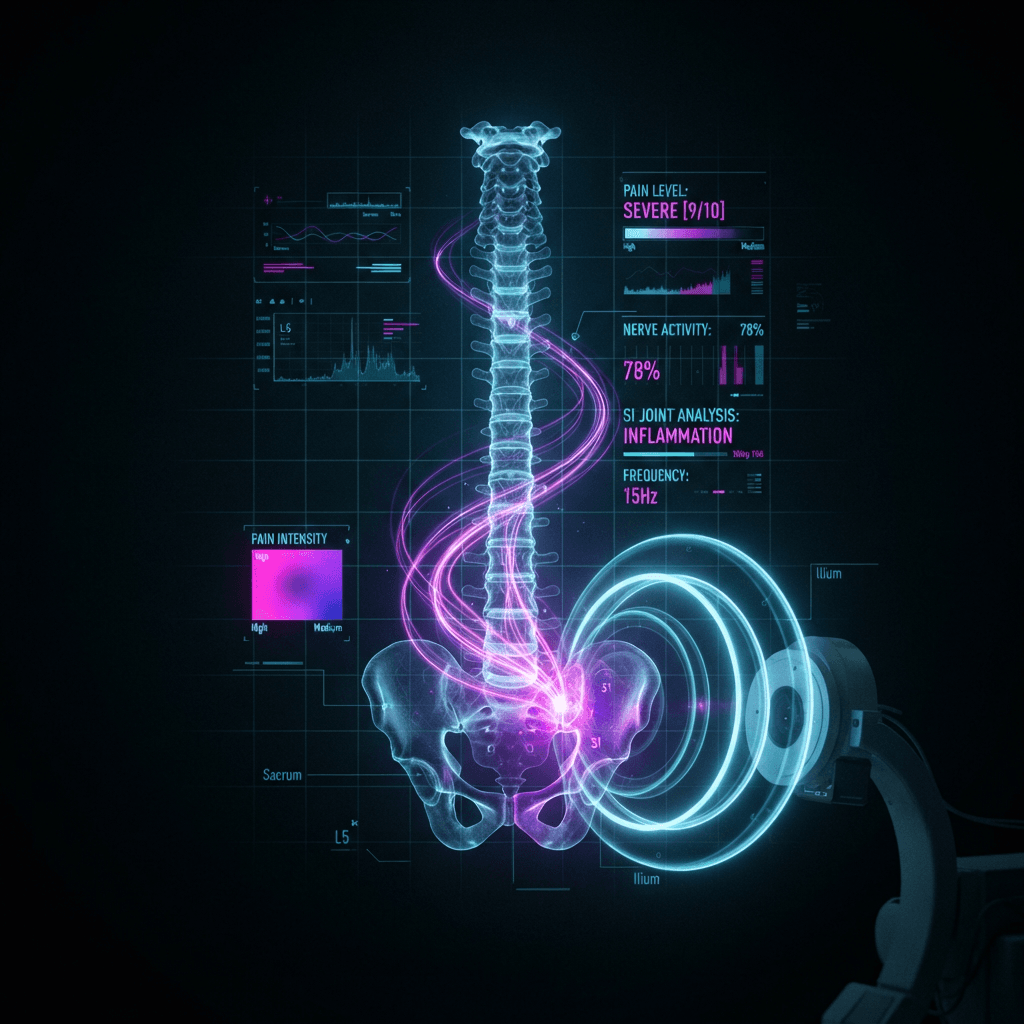
A sacroiliac joint injection places anesthetic and steroid into the joint where the base of the spine meets the pelvis. It treats and helps diagnose pain in the low back, buttock or upper thigh that comes from the SI joint. Relief often lasts weeks to months, and the procedure takes about 15 to 20 minutes under imaging guidance.
The two sacroiliac joints connect the sacrum to the pelvis and transfer load between the upper body and legs. Pain can arise from arthritis, inflammation (including sacroiliitis linked to inflammatory conditions), injury, pregnancy-related changes or prior spine fusion that increases stress on the joint.
Common signs of SI joint pain
- Pain on one side of the lower back, just beside the base of the spine
- Pain in the buttock that may spread into the groin or back of the thigh
- Pain with standing up from a chair, climbing stairs, turning in bed or lying on one side
- Pain usually does not travel below the knee
Diagnosis Note
Because SI joint pain overlaps with disc, facet and hip problems, a careful exam and, often, a diagnostic injection are used to confirm the source.
Conditions treated with spinal injections
The right injection depends on which structure is causing the pain. Injections are usually considered after conservative care such as activity modification, physical therapy and anti-inflammatory medicine, unless pain is severe or neurological symptoms are present.
Sciatica / lumbar radiculopathy
Typical symptoms: Pain, tingling or numbness shooting from the back or buttock down the leg
Injection often considered: Transforaminal or interlaminar epidural; selective nerve root block
Most consistent short-term benefit for radiating leg pain from a disc
Herniated or bulging disc
Typical symptoms: Back, neck or limb pain; sometimes weakness
Injection often considered: Epidural steroid injection
Helps inflammation; does not remove the herniation
Cervical radiculopathy
Typical symptoms: Neck pain with arm pain, tingling or weakness
Injection often considered: Cervical epidural or nerve root block
Short-term relief for arm pain is reported
Spinal stenosis
Typical symptoms: Leg pain or heaviness with walking, relief when bending forward
Injection often considered: Epidural steroid injection
Short-term relief for some; long-term benefit less certain
Facet joint arthritis
Typical symptoms: Axial back or neck pain, worse with extension and twisting
Injection often considered: Facet injection, medial branch block, radiofrequency ablation
Diagnostic blocks improve patient selection
SI joint dysfunction
Typical symptoms: One-sided low back or buttock pain, worse with transitions
Injection often considered: SI joint injection
Useful for diagnosis and short-term relief
Post-surgical spine pain
Typical symptoms: Persistent pain after spine surgery
Injection often considered: Caudal epidural, nerve root block, others
Chosen case by case
When injections are not the first answer: Pain with fever, unexplained weight loss, a history of cancer, trauma, or new bowel or bladder changes needs prompt medical evaluation first.
What to expect before, during and after
Before your appointment
- Medications: Tell us about blood thinners, aspirin and anti-inflammatory medicines. Do not stop any prescribed medicine unless your physician instructs you to.
- Diabetes: Bring your glucose readings. Steroids can raise blood sugar for a few days.
- Allergies: Especially to contrast dye, iodine, latex, local anesthetics or steroids.
- Transport: Arrange a ride home if you are having sedation.
- Bring: Photo ID, insurance card, medication list, and your imaging reports or disc.
During the procedure
- 1A nurse checks your vital signs and confirms the planned level and side.
- 2You are positioned, usually face down, and the skin is cleaned.
- 3A numbing injection stings briefly. Most people then feel only pressure.
- 4The physician guides the needle with fluoroscopy and confirms position with contrast.
- 5Medicine is injected. You may feel pressure, warmth, or reproduction of your familiar pain.
- 6A small bandage is applied.
Aftercare
- Take it easy for the rest of the day; resume normal activity the next day as comfortable.
- Avoid soaking in a bath, hot tub or pool for the day, to reduce infection risk.
- Use ice on the site for soreness.
- Keep a pain diary for the first week.
- People with diabetes should monitor glucose more often for several days.
Recovery timeline
| When | What is typical |
|---|---|
| First few hours | Numbness or heaviness from the anesthetic; pain may return to baseline as it wears off |
| Day 1 to 2 | Soreness at the injection site; ice and rest help |
| Day 3 to 7 | Steroid begins to work; this is when benefit is usually judged |
| Week 2 to 6 | Window to progress physical therapy and strengthening |
| Follow-up visit | Review of response and next steps |
When to call us or seek emergency care
Call the clinic for:
- Increasing redness, swelling or drainage at the site
- Fever
- Severe headache that is worse when sitting up
- Pain that is clearly worse than before
Go to the emergency department for:
- New weakness
- Loss of bladder or bowel control
- Numbness in the groin or saddle area
- Severe sudden headache with neck stiffness
- Chest pain or shortness of breath
Risks, side effects and safety
Spinal injections are generally well tolerated when performed by trained physicians with image guidance. Common side effects are temporary: soreness, flushing, mild headache and a short rise in blood sugar. Serious complications such as infection, bleeding, nerve injury or, rarely, spinal cord or brain injury from a blocked blood vessel are uncommon but possible, so informed consent is essential.
Common side effects
Usually resolve in days
- Soreness or bruising at the injection site
- Temporary numbness or heaviness in the limb
- Flushing, warmth in the face, or a feeling of being keyed up
- Trouble sleeping the first night
- Temporary rise in blood sugar, especially in people with diabetes
- Short-term increase in pain before the steroid takes effect
- Mild fluid retention or mood changes in some people
Less common complications
- Post-dural puncture headache: A headache that is worse upright and better lying down, from a small spinal fluid leak; most settle with rest, fluids and caffeine, and some need a blood patch
- Infection: At the skin, in the epidural space, or in the spine; rare, but it needs urgent treatment
- Bleeding or epidural hematoma: Rare, and higher risk with blood thinners or clotting disorders
- Allergic reaction: To contrast dye, anesthetic or steroid
- Vasovagal reaction: Feeling faint during the procedure
Rare but serious risks
- Nerve injury
- Spinal cord or brain injury, stroke, vision loss, or paralysis from an injection into or blockage of a blood vessel, mainly reported with certain cervical and transforaminal approaches
In 2014 the US Food and Drug Administration required a Drug Safety Communication and label warning about rare serious neurologic events after epidural steroid injections, and stated that effectiveness and safety for neck and back pain had not been established by the agency.
Risks of repeated steroid exposure
Frequent or high cumulative steroid doses can affect bone density, blood sugar, mood and the body's natural cortisol production. This is one reason injections are spaced out and limited, and why your response to each injection guides further treatment.
Alternatives to spinal injections
Physical therapy and exercise, oral anti-inflammatory medicines or nerve pain medicines, heat and activity modification, chiropractic or manual therapy where appropriate, radiofrequency ablation for facet pain, and surgery when there is progressive weakness or structural compression that does not respond to other care.
Candidacy, insurance and cost
Spinal injections are usually covered by insurance when pain has lasted several weeks, imaging and exam findings match the symptoms, and conservative treatment has not provided enough relief. Costs vary by injection type, facility and plan.
Who may be a good candidate
- Back, neck, arm or leg pain lasting several weeks that limits daily life or sleep
- A pain pattern that matches your MRI or CT findings
- Incomplete relief from rest, medication or physical therapy
- A wish to avoid or delay surgery, or a need for pain relief to participate in rehabilitation
Who should wait or consider other options
- Active infection or fever
- Bleeding disorder or anticoagulants that cannot be paused
- Uncontrolled diabetes, until glucose is stable
- Pregnancy, unless clearly essential
- Pain that does not match imaging or exam
- Red-flag symptoms such as progressive weakness, loss of bladder or bowel control, or suspected infection or cancer, which need urgent evaluation
Insurance and prior authorization
- Most commercial plans and Medicare cover medically necessary spinal injections with specific criteria, which often include documented symptom duration, failed conservative care, and a pain scale.
- Radiofrequency ablation often requires two positive diagnostic blocks.
- Many insurers also require documentation of pain relief before approving repeat injections.
- Our team handles prior authorization where required.
Frequently asked questions
What is a spinal injection?
A spinal injection places medicine, usually a steroid and a local anesthetic, near an irritated spinal nerve or joint using imaging guidance. It reduces inflammation and pain, helps diagnose the pain source, and can make physical therapy easier. It does not cure the underlying spine condition.
What are spinal injections used for?
They are used for sciatica, herniated discs, pinched nerves, spinal stenosis, facet joint arthritis and sacroiliac joint pain. They treat pain that spreads into the arm or leg, and they help locate which structure is the pain source.
Do spinal injections hurt?
Most people feel a brief sting from the numbing medicine and then pressure. The procedure is usually well tolerated. Soreness for a day or two afterward is common, and sedation may be available for anxious patients.
How long does a spinal injection take?
The injection itself takes about 15 to 30 minutes. With check-in, preparation and recovery monitoring, plan for roughly an hour at the clinic. Most people go home the same day.
How long does it take for a spinal injection to work?
The anesthetic can give relief within minutes, but it wears off in hours. The steroid usually starts working in 2 to 7 days, and the full effect is judged after about one to two weeks.
How long do spinal injections last?
Relief ranges from days to several months, depending on the condition and the person. Some people have lasting benefit, while others get little. Radiofrequency ablation for facet pain often lasts around 6 to 12 months.
How many spinal injections can you have in a year?
There is no universal limit. Many physicians and some insurers limit steroid injections to a few per spinal region per year and continue only if earlier injections gave meaningful relief.
Are spinal injections safe?
Most people have only minor, temporary effects such as soreness or flushing. Serious complications such as infection, bleeding or nerve injury are uncommon but possible. Image guidance, careful screening and informed consent reduce risk.
What is the difference between an epidural injection and a nerve block?
An epidural steroid injection treats inflammation across the epidural space around several nerves, while a nerve root block targets one specific nerve. Nerve blocks are often used to diagnose which nerve is causing the pain.
Can a spinal injection cure sciatica?
An injection can reduce sciatica caused by an inflamed nerve and give time for healing, but it does not repair the disc or narrowing. Many people improve with a combination of injections, exercise therapy and time.
Do I need to stop blood thinners before a spinal injection?
Often yes, but only your physician can decide. The timing depends on the medicine and your health risk. Never stop a blood thinner on your own.
Can I drive home after a spinal injection?
If you receive sedation, you cannot drive and need a ride. Without sedation, many people can, but numbness or heaviness in a limb can last a few hours, so having someone drive is safer.
What should I avoid after a spinal injection?
Avoid strenuous activity and soaking in a bath, hot tub or pool for the rest of the day. Resume normal activity the next day as comfortable, and follow your physician's instructions.
When should I call the doctor after a spinal injection?
Call for fever, spreading redness, swelling or drainage at the site, or a severe headache that is worse upright. Go to the emergency department for new weakness, loss of bladder or bowel control, or breathing trouble.
Do steroid injections weaken bones or raise blood sugar?
Steroids can temporarily raise blood sugar, particularly in people with diabetes. Frequent or high cumulative doses may affect bone density. This is why injections are spaced out and used at the lowest effective dose.
Is a spinal injection better than surgery?
They serve different purposes. Injections are low-risk, non-surgical and aim to reduce pain and inflammation. Surgery addresses structural problems and is considered for progressive weakness, severe compression, or pain that fails other treatment.
Glossary
Epidural space
The space inside the spinal canal that surrounds the spinal nerves
Corticosteroid
An anti-inflammatory medicine used to calm swollen, irritated nerves or joints
Radiculopathy
Pain, numbness or weakness from a pinched or irritated spinal nerve root
Sciatica
Pain that runs from the lower back or buttock down the leg along the sciatic nerve
Fluoroscopy
Live X-ray used to guide the needle
Contrast dye
A dye that shows on X-ray to confirm the needle is in the right place
Facet joint
A small joint at the back of the spine that guides motion
Medial branch block
An anesthetic block of the small nerves that carry pain from a facet joint
Radiofrequency ablation
Heat applied to a nerve to interrupt pain signals for months
Sacroiliac joint
The joint between the sacrum at the base of the spine and the pelvis
Spinal stenosis
Narrowing of the spinal canal that can press on nerves
Herniated disc
A disc whose inner material pushes through its outer layer and may irritate a nerve
Your care pathway at Queens Pain Clinic
01
Consultation
Examination and review of your imaging.
02
Shared decision
A shared decision about whether an injection fits your condition and goals.
03
Procedure
The image-guided procedure, with sedation options offered.
04
Follow-up
Follow-up to measure response and plan rehabilitation or next steps.
Benefits of Spinal Injections
Spinal injections deliver medicine exactly where inflammation is, which can calm pain quickly and open a window for rehabilitation, without major surgery.
Spinal injections are a useful, low-risk tool for calming spinal pain and guiding the next step in care. They work best as part of a plan that includes rehabilitation, not as a stand-alone cure.
- Relief varies from days to several months
- They do not fix the underlying structural problem
- Image guidance improves accuracy and safety
- Best combined with exercise and physical therapy