Elbow Pain Treatment
in Queens, NY
Elbow pain that won't quit? We can find out why.
Board-certified pain physicians in Rego Park diagnose the actual source of your elbow pain and treat it without surgery whenever that's a reasonable option. Many patients are seen within the same day.
Tendon overuse (tennis elbow and golfer's elbow) is the most frequent cause of elbow pain. Nerve compression at the cubital or radial tunnel, olecranon bursitis, arthritis, and pain referred from the neck are also common.
Most cases improve without surgery. Queens Pain Clinic starts with a careful exam and, when it helps, ultrasound imaging in the room, then builds a plan around what we find.
Last reviewed October 2026
Elbow pain usually comes from one of four places: an irritated tendon (tennis elbow or golfer’s elbow), a compressed nerve (cubital tunnel or radial tunnel syndrome), an inflamed bursa, or a worn joint. Most cases improve without surgery. Treatment depends on which structure is the problem, so care starts with a careful exam and, when it helps, ultrasound imaging in the room. A plan may include physical therapy, bracing, targeted injections, or regenerative options like PRP. Board-certified pain physicians at Queens Pain Clinic in Rego Park diagnose the actual source and favor non-surgical treatment whenever that’s a reasonable option. Many patients are seen within the same day.
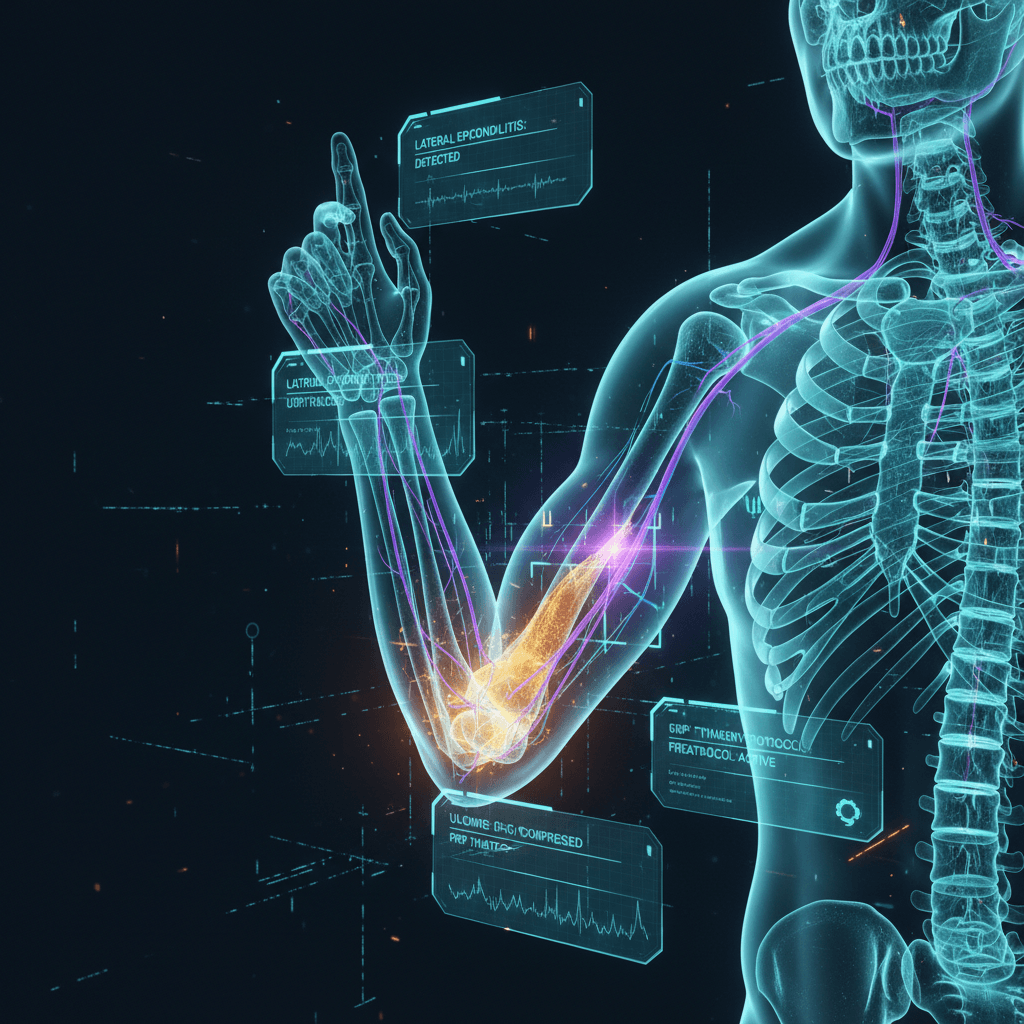
Pain from a tendon, nerve, bursa or joint, treated without surgery whenever reasonable
Conversation, hands-on exam and, when it helps, ultrasound in the room
9701 66th Ave, Rego Park, NY 11374
Mon, Tue, Thu, Fri 9 am to 6 pm. Sun 9 am to 3 pm. Closed Wed and Sat
Call 1-877-97 NO PAIN
A Small Joint That Does a Lot of Work
Gripping, lifting, typing, swinging and turning a doorknob all load the tendons, nerves and cartilage in your elbow.
When one of those structures is overloaded, the pain tends to show up in a predictable spot. That's useful, because where it hurts helps point to why.
Care starts with a careful exam. When it helps, we add ultrasound imaging in the room. Treatment then depends on which structure is the problem, and may include physical therapy, targeted injections, or regenerative options like PRP.
What's Causing Your Elbow Pain?
Where the pain sits is a clue. Here's how the common patterns line up.
Outer elbow: tennis elbow
Pain on the outer elbow is most often lateral epicondylitis, better known as tennis elbow. Most people who get it have never held a racquet. Painters, cooks, mechanics and people who spend the day at a keyboard and mouse are common patients. It tends to get worse when you lift a coffee cup, shake hands or twist a jar lid.
Inner elbow: golfer’s elbow
Pain on the inner elbow points toward medial epicondylitis, or golfer’s elbow. It affects the tendons that flex the wrist and fingers, so gripping and carrying tend to set it off.
Numbness or tingling: cubital tunnel
Numbness or tingling in the ring and small fingers suggests the ulnar nerve is being squeezed at the cubital tunnel, the same spot as the “funny bone.” It may be most noticeable at night or when the elbow stays bent, for example while on the phone.
Forearm ache: radial tunnel
Forearm aching, or weakness when extending the fingers or wrist, can mean radial tunnel syndrome or posterior interosseous nerve irritation. It’s often mistaken for tennis elbow, which is one reason a proper exam matters.
Swelling at the back: olecranon bursitis
Swelling at the back of the elbow is typical of olecranon bursitis and can look like a golf ball under the skin. It can come from leaning on the elbow for years, or from a small cut or an infection that needs prompt attention.
Stiffness, grinding or locking: the joint
Stiffness, grinding, or a locking sensation can mean arthritis or loose cartilage in the joint.
Pain that starts in the neck
A pinched nerve in the lower cervical spine (C6 or C7) sometimes mimics a local elbow problem. If we suspect it, we examine your neck too.
Less common causes
Biceps and triceps tendon problems, ligament sprains, calcium deposits in the tendon, gout, and inflammatory arthritis.
Related areas: see our pages on hand and wrist pain, neck pain and shoulder pain.
How We Find the Source
A conversation
We start with when the pain began, what makes it worse, and what you do for work and recreation.
A hands-on exam
We examine the elbow, wrist, shoulder and neck, including strength, range of motion and nerve function.
Ultrasound, if it helps
Point-of-care ultrasound lets us look at the tendon, bursa and nerve in real time, including while you move.
Other tests, when needed
X-ray or MRI may be used when arthritis, a fracture or something structural is suspected. EMG and nerve conduction studies may be used when nerve compression is being considered.
Elbow Pain Treatment Without Surgery
Not everyone needs an injection. Many people get better with a good rehab plan and changes in how they use the arm. Here's what we may use, and what to expect from each.
Physical therapy and activity changes
For tendon problems, the evidence best supports progressive strengthening, especially slow, loaded exercises, along with adjustments to grip, tools and workstation setup. This is the foundation for nearly everyone.
Bracing and splinting
A counterforce strap can take stress off an irritated tendon. A night splint that keeps the elbow from bending too far can calm cubital tunnel symptoms.
Corticosteroid injection
A steroid injection can reduce pain quickly and help some people get through therapy. For tennis elbow, early relief doesn’t always hold up over several months, so we use injections selectively and talk through the tradeoff first.
PRP (platelet-rich plasma)
PRP uses a small sample of your own blood, spun down to concentrate the platelets, then injected into the damaged tendon under ultrasound. It’s an option for chronic tendon pain that hasn’t responded to therapy. Studies for tennis elbow have shown promising results for some people, but the research is mixed and it isn’t guaranteed to work. We discuss realistic expectations first, and because PRP is often self-pay, whether insurance applies.
Nerve hydrodissection
For cubital tunnel and radial tunnel symptoms, we inject fluid around the nerve under ultrasound to help free it from surrounding tissue. It’s a less invasive option to try before considering surgery.
Bursa aspiration and injection
For olecranon bursitis, we may drain the fluid and, if infection has been ruled out, inject medication to reduce the chance of it coming back.
Prolotherapy
For some people with ligament laxity or tendon problems that haven’t settled, dextrose prolotherapy may be considered. The evidence is limited.
Every injection is performed with ultrasound guidance, so the medication goes where it's meant to go and not a few millimeters away.
What to bring
A list of your medications, any prior imaging, and notes from other doctors. Wear a short-sleeved shirt.
The exam
The exam, often with ultrasound, usually takes 30 to 45 minutes.
Plain explanation
You get a plain explanation of what we think is going on and your treatment options, including doing nothing invasive.
Agree on a plan
Some people start therapy and a brace that day. Others schedule a procedure. Many need nothing more than a few weeks of the right exercises.
After most injections, you can go home the same day. We'll tell you when it's reasonable to return to work, sports or lifting, which depends on the procedure and your job.
When to Get Seen Right Away
- A hot, red, swollen elbow, especially with fever or chills
- Sudden inability to move the arm, or a visible deformity after a fall
- Sudden weakness or numbness in the whole arm or hand
Arm pain together with chest pressure, shortness of breath or sweating: call 911.
Elbow pain that lingers is worth having looked at. Come in if it:
- Lasts beyond a few weeks
- Wakes you at night
- Limits your grip
Elbow Pain Questions
Ready to Find Out Why Your Elbow Hurts?
Call 1-877-97 NO PAIN or request an appointment online. Queens Pain Clinic has served patients across Queens since 2004.
9701 66th Ave, Rego Park, NY 11374
Phone: 1-877-97 NO PAIN
- Monday9:00 am to 6:00 pm
- Tuesday9:00 am to 6:00 pm
- WednesdayClosed
- Thursday9:00 am to 6:00 pm
- Friday9:00 am to 6:00 pm
- SaturdayClosed
- Sunday9:00 am to 3:00 pm
Last reviewed October 2026. This page is for general education and isn't a substitute for an individual medical evaluation.