Trigger Point Injections in Queens, NY
Trigger point injections are a quick in-office treatment for painful muscle knots in the neck, shoulders, back, hips and jaw. A physician inserts a fine needle into the tender spot and injects numbing medicine, or uses the needle alone.
Most visits take under 30 minutes, and you go home the same day. Queens Pain Clinic in Rego Park has been treating pain in Queens since 2004.
Last reviewed October 2026
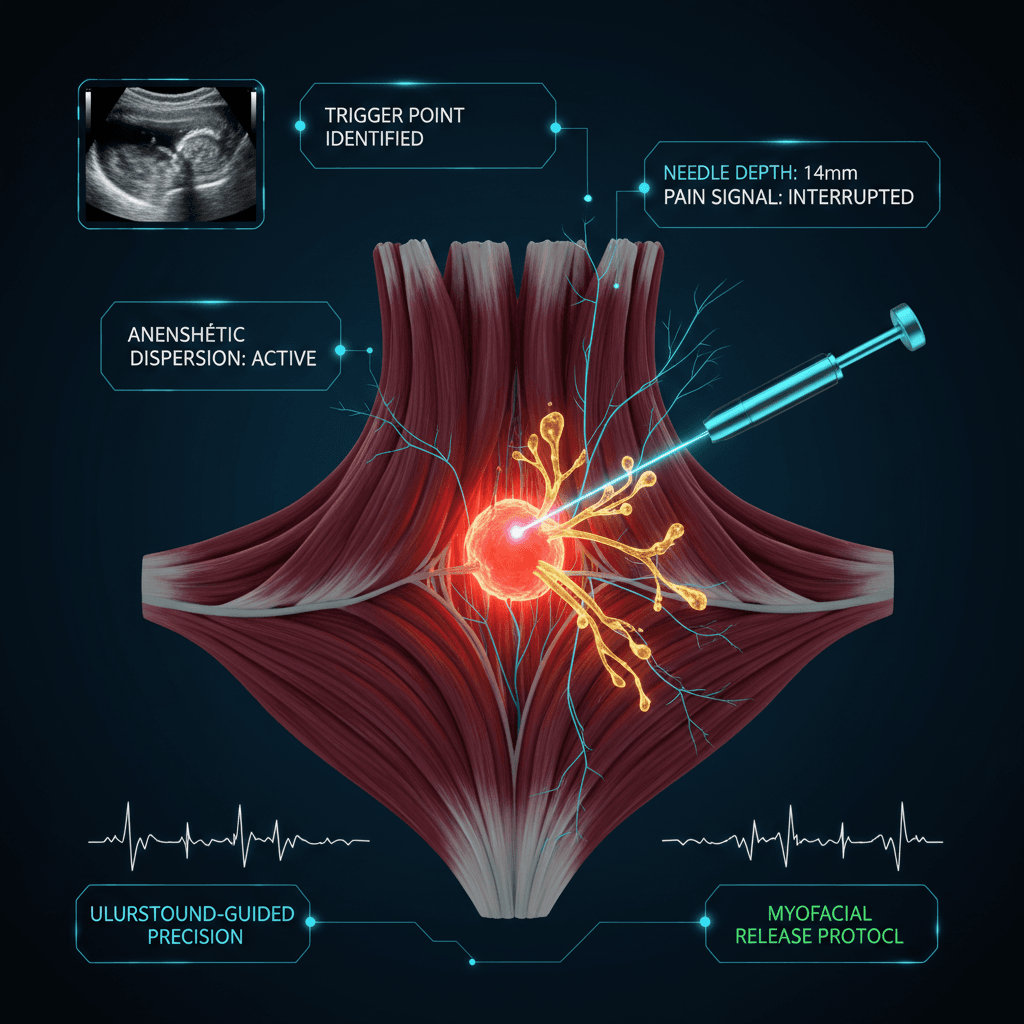
Trigger point injections are a quick in-office treatment for painful muscle knots in the neck, shoulders, back, hips and jaw. A physician inserts a fine needle into the tender spot and injects numbing medicine, or uses the needle alone (dry needling). Most visits take under 30 minutes, you stay awake with local numbing only and no sedation, and you go home the same day. Some people feel looser within minutes. Soreness for a day or two is common, and fuller benefit may follow. Relief can last weeks or longer, especially when paired with physical therapy and posture or workstation changes. The knots can come back, so a short series of one to three visits may help. If a few sessions bring no meaningful change, the plan should be reassessed rather than repeated unchanged.
Conditions Addressed
Top Benefits
- Targets the exact tender muscle knot that is causing local or referred pain
- Some people feel the muscle loosen within minutes of the injection
- Quick in-office visit, usually under 30 minutes, with local numbing only and no sedation
- Dry needling is available if you prefer a no-medication option
- Can ease pain enough to take part in physical therapy and stretching
- Most people resume normal activity within a day
A fine needle placed into a painful muscle knot, with numbing medicine or with no medication
Local numbing only. No sedation
Lidocaine, bupivacaine or saline. Dry needling uses no medication
Most visits take under 30 minutes. Home the same day
Most people resume normal activity within a day
One to three visits
Weeks or longer. Knots can recur
9701 66th Ave, Rego Park, NY 11374
What Is a Trigger Point, and How Does the Injection Help?
A trigger point is a tight, tender spot in a muscle, often called a knot. It can send pain to other places. For example, a knot in the upper trapezius can cause pain behind the eye or up the neck. When a person has several knots that keep coming back, doctors call it myofascial pain syndrome.
The injection targets the spot itself. The physician places a fine needle into the knot, and you may feel a brief muscle twitch. Experts are still unsure exactly how it works. The needle, the medicine or both may play a part.
The goal is to let the muscle relax so you can move more easily and take part in physical therapy.
Trigger point injection
A fine needle delivers numbing medicine such as lidocaine or bupivacaine, or sterile saline, into the tender spot. Some people report less soreness afterward with numbing medicine.
Dry needling
The same fine needle is used with no medicine. Research has not shown a consistent winner between the two approaches. Your physician will talk through the options based on your situation and preferences.
What Conditions Do Trigger Point Injections Treat?
They are used for muscle pain that traces back to a tender knot. Injections do not cure fibromyalgia or repair a herniated disc, but they may relieve the muscle pain that comes with them.
Who Is a Good Candidate?
- You can point to a painful spot in a muscle
- The pain has lasted more than a few weeks
- Rest, stretching or medication have not given enough relief
- You want to be able to take part in physical therapy
A physician examines you first. If you have numbness, weakness or pain that shoots down a limb, which can point to a nerve or spine problem, you may need imaging or a different treatment before any injection.
- Blood thinners or a bleeding disorder
- An allergy to local anesthetics
- Skin infection near the area to be treated
- Pregnancy or conditions that affect healing
These can change the plan or call for an alternative. Do not stop any prescribed medication unless your physician tells you to.
What Happens During the Visit?
Five steps, from the exam to going home the same day.
Exam
The physician examines you and feels for tight bands in the muscle. You are asked where the pain travels.
Preparation
The skin is cleaned and you are positioned, either seated or lying down.
Injection
The physician guides the needle to the knot by touch, or with ultrasound if needed. You may feel a brief muscle twitch. Several sites can be treated in one visit.
Rest
You rest for a few minutes, and the physician checks how you feel.
Home and aftercare
You go home the same day with stretching and, if useful, physical therapy guidance.
How Long Does Relief Last?
Some people feel looser within minutes. Soreness for a day or two is common, and fuller benefit may follow.
Most people resume normal activity within a day. Skip heavy lifting and intense workouts for about a day.
Relief can last weeks or longer, particularly when you pair the injection with physical therapy and changes to your posture and workstation.
Knots can come back. A short series of visits may help.
If a few sessions bring no meaningful change, we should reassess the plan rather than repeat it unchanged.
Your plan is tailored to your pain, your job and your schedule.
What Are the Risks and Precautions?
Most effects are mild and short-lived. Your physician will review your personal risks before you decide.
- Temporary soreness at the treated spot
- Bruising
- Lightheadedness
- Less common: bleeding, infection or an allergic reaction to the anesthetic
- Rare: a collapsed lung from injections near the ribs or upper back. Needle depth and angle are controlled to lower this risk
- Fever or spreading redness at the injection site
- Chest pain
- Trouble breathing (seek emergency care)
Call the clinic for fever or spreading redness. Seek emergency care for chest pain or trouble breathing.
We recommend pairing the injection with stretching, strengthening and posture work. Physical therapy is common, and acupuncture or our other services may suit some patients.
Coverage depends on your plan and the diagnosis. Injections may be part of auto-injury or work-injury care. Our front desk can check your benefits. See Insurance and Payment Options, or call 1-877-97 NO PAIN.
Queens Pain Clinic has served Queens since 2004. We see patients from Rego Park, Forest Hills, Elmhurst, Kew Gardens, Middle Village, Jackson Heights and Flushing.
These pages may also help.
Trigger Point Injection FAQs
Find Out If Trigger Point Injections Are Right for You
Request a consultation and we'll examine you, explain whether an injection makes sense, and build a plan around your pain, your job and your schedule. See what to expect on our Your First Visit page, or call 1-877-97 NO PAIN.
9701 66th Ave, Rego Park, NY 11374
Phone: 1-877-97 NO PAIN
Treating pain in Queens since 2004.
- Monday9:00 am to 6:00 pm
- Tuesday9:00 am to 6:00 pm
- WednesdayClosed
- Thursday9:00 am to 6:00 pm
- Friday9:00 am to 6:00 pm
- SaturdayClosed
- Sunday9:00 am to 3:00 pm
Last reviewed October 2026. This page is for general information and isn't medical advice. Individual results vary. Talk with a qualified physician before starting any treatment.