Peripheral Nerve Stimulation in Queens, NY
Peripheral nerve stimulation (PNS) treats chronic pain that comes from one specific nerve. A thin lead is placed beside the nerve with a needle, and a small stimulator sends mild electrical pulses that change the pain messages that nerve carries. It is minimally invasive, it is not a drug, and the lead can be removed if it does not help.
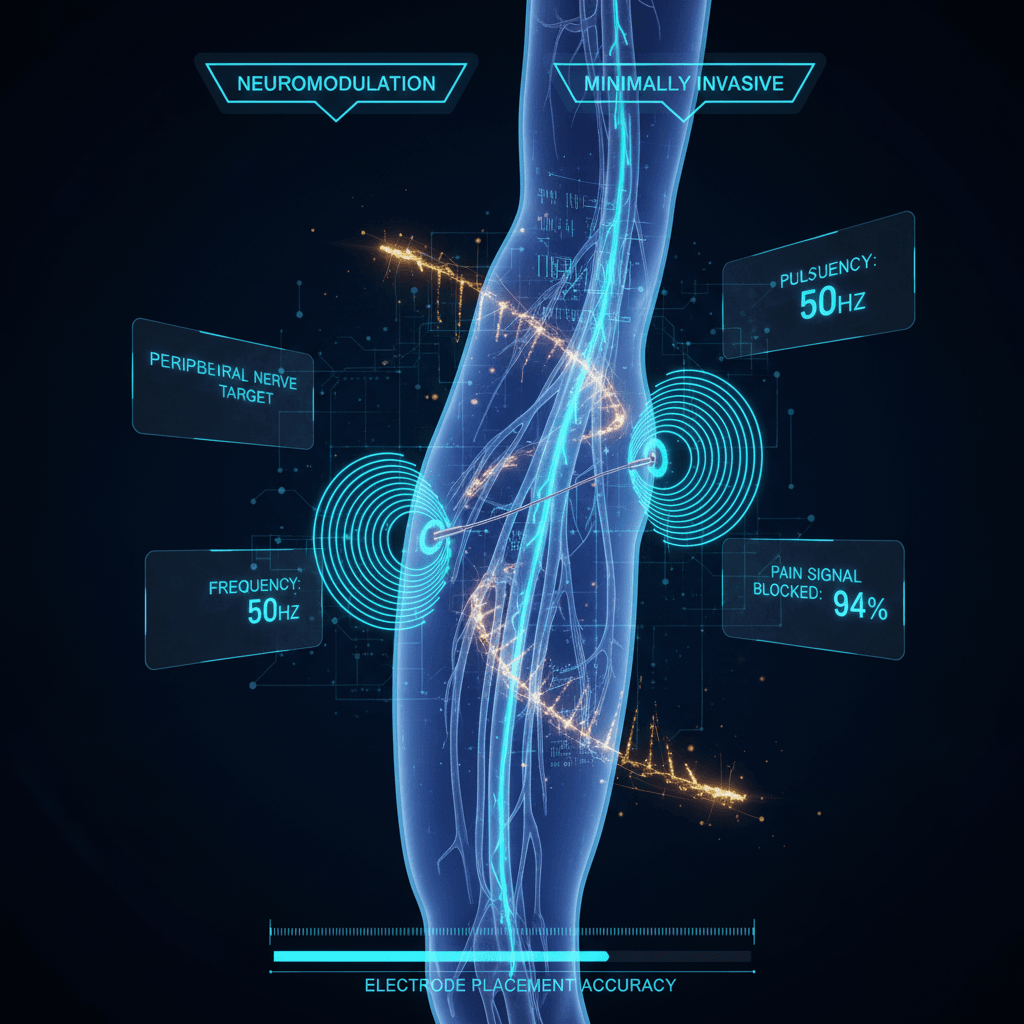
Peripheral Nerve Stimulation — The Essential Summary
Peripheral nerve stimulation (PNS) is a treatment for chronic pain that comes from one specific nerve. A thin lead is placed beside the nerve with a needle, and a small stimulator sends mild electrical pulses that change the pain messages that nerve carries. It is minimally invasive, it is not a drug, and it can be reversed: if it does not help, the lead can be removed. At Queens Pain Clinic in Rego Park, we start with an honest look at whether your pain really follows a single nerve, and we explain what to expect, including cost, before you decide.
Key Features
Conditions Addressed
Pain tied to one identifiable nerve, including after surgery, injury or nerve damage
Usually by needle with ultrasound or X-ray guidance, generally no incision for the lead
Typically local numbing, with or without light sedation
May be an option if you want to cut back on pain pills
The lead can be removed if it does not help
9701 66th Ave, Rego Park, NY 11374
Board-certified pain physicians
1-877-97 NO PAIN
What Is Peripheral Nerve Stimulation?
Some chronic pain comes from a single nerve that has been injured, irritated or damaged. PNS goes after that nerve directly. A thin lead is placed beside it with a needle, and a small stimulator sends mild electrical pulses that change the pain messages the nerve carries.
A small remote controls the device, and your doctor programs it. Some people feel tingling. Others feel nothing and simply notice less pain.
The FDA has cleared several PNS systems for chronic pain from a peripheral nerve. They are not all the same: some are temporary and used for up to 60 days before removal, while others may stay in longer term. We explain which system fits your situation and how its trial works before you decide.
- Your pain has lasted at least three months
- It is localized to the area one nerve supplies
- A diagnostic nerve block gave you temporary relief
- Medication, therapy or injections have not been enough
- You can complete a trial and attend follow-up visits
- An active infection
- A bleeding disorder that cannot be managed
- Widespread pain without a clear nerve source
Benefits of Peripheral Nerve Stimulation
PNS does not work for everyone, and we do not promise a percentage. Here is what it can offer when your pain is a good match.
In a study of one PNS system for chronic pain, about two-thirds of participants had at least a 50% reduction in pain or pain interference after eight weeks.
That is a group result, not a promise for any one person. The trial exists so we can see how you respond before a longer commitment.
PNS may let you take less medication if your pain improves, but that is not guaranteed. Please do not stop or change a prescription on your own.
Less pain may also help your sleep and make it easier to take part in physical therapy.
Conditions We Evaluate for PNS
The first visit determines whether your pain is nerve-related and whether PNS makes sense for you.
How Peripheral Nerve Stimulation Works
Four steps, from assessment to a decision you make with your physician.
Assessment
We review your history and examine you. We usually confirm the pain source with a diagnostic nerve block before going further.
Lead placement
With numbing medicine and ultrasound or X-ray guidance, we place a thin lead beside the nerve.
Trial
The trial runs from several days up to 60 days, depending on the device. You track your pain and activity in a diary.
Shared decision
We decide together based on your pain and function. Depending on the system, next steps may be a longer-term implant or lead removal. If it does not work, we remove the lead and other options stay open.
Risks and Limits
Serious complications are uncommon, but PNS is not risk-free. Tell your physician about blood thinners, diabetes, a history of infection, or an implanted device such as a pacemaker so we can review your individual risks.
Infection can occur at the needle or implant site.
A lead can shift or give less coverage, which may mean repositioning it.
The adhesive or device can irritate the skin.
Parts can fail and need repair or replacement.
PNS does not work for everyone, and results vary.
PNS vs. Spinal Cord Stimulation
Some people may qualify for either, and we talk through the trade-offs with you. Learn more about spinal cord stimulation.
Where the lead goes
Beside a specific peripheral nerve
In the space around the spinal cord
What it targets
Localized pain in one nerve territory, often after surgery or injury
Broader, persistent back and leg pain, including after back surgery
Trial
Length depends on the device, from several days up to 60 days
Usually about a week
Coverage is mixed and changing. Medicare has a local coverage policy (LCD L34328) only for certain regions and conditions. Some plans cover PNS when their criteria are met, while several large commercial insurers treated chronic-pain PNS as experimental in 2026.
Before any procedure, our team verifies your benefits, your cost and any prior authorization. Call 1-877-97 NO PAIN or see our Insurance page.
We ask where the pain is, what triggers it and how it affects daily life. We examine you and explain whether PNS, another treatment or further testing is reasonable. Booking a consultation does not commit you to a device.
- Imaging reports or images
- Your medication list
- A note about treatments you have already tried
PNS is one option among several for nerve and joint pain. Your physician may also discuss these with you.
Peripheral Nerve Stimulation — Questions Answered
Talk to a Pain Specialist About Your Nerve Pain
If you have lived with persistent nerve pain, our board-certified physicians will review your history, tell you honestly whether PNS fits, and explain the cost before anything is scheduled. Call 1-877-97 NO PAIN or request an appointment online.
9701 66th Ave, Rego Park, NY 11374
Phone: 1-877-97 NO PAIN
- Monday9:00 am to 6:00 pm
- Tuesday9:00 am to 6:00 pm
- WednesdayClosed
- Thursday9:00 am to 6:00 pm
- Friday9:00 am to 6:00 pm
- SaturdayClosed
- Sunday9:00 am to 3:00 pm
This page is for general information and is not medical advice. Individual results vary. Talk with a qualified physician before starting any treatment.