PRP Therapy in Queens, NY
Concentrated platelets from your own blood, injected under ultrasound guidance in Rego Park.
Platelet-rich plasma (PRP) therapy uses a concentrated sample of your own blood to treat injured tendons, worn joints and stubborn soft-tissue pain. At Queens Pain Clinic in Rego Park, a physician draws a small amount of blood, spins it in a centrifuge to concentrate the platelets, and injects the result into the painful area under ultrasound guidance. The appointment takes about 60 to 90 minutes, and you go home the same day.
PRP isn't a cure-all, and we won't pretend it is. It tends to work best for knee osteoarthritis and for tendon problems that haven't settled with rest and physical therapy. Our physicians will tell you honestly whether it fits your situation, or whether another option would serve you better.
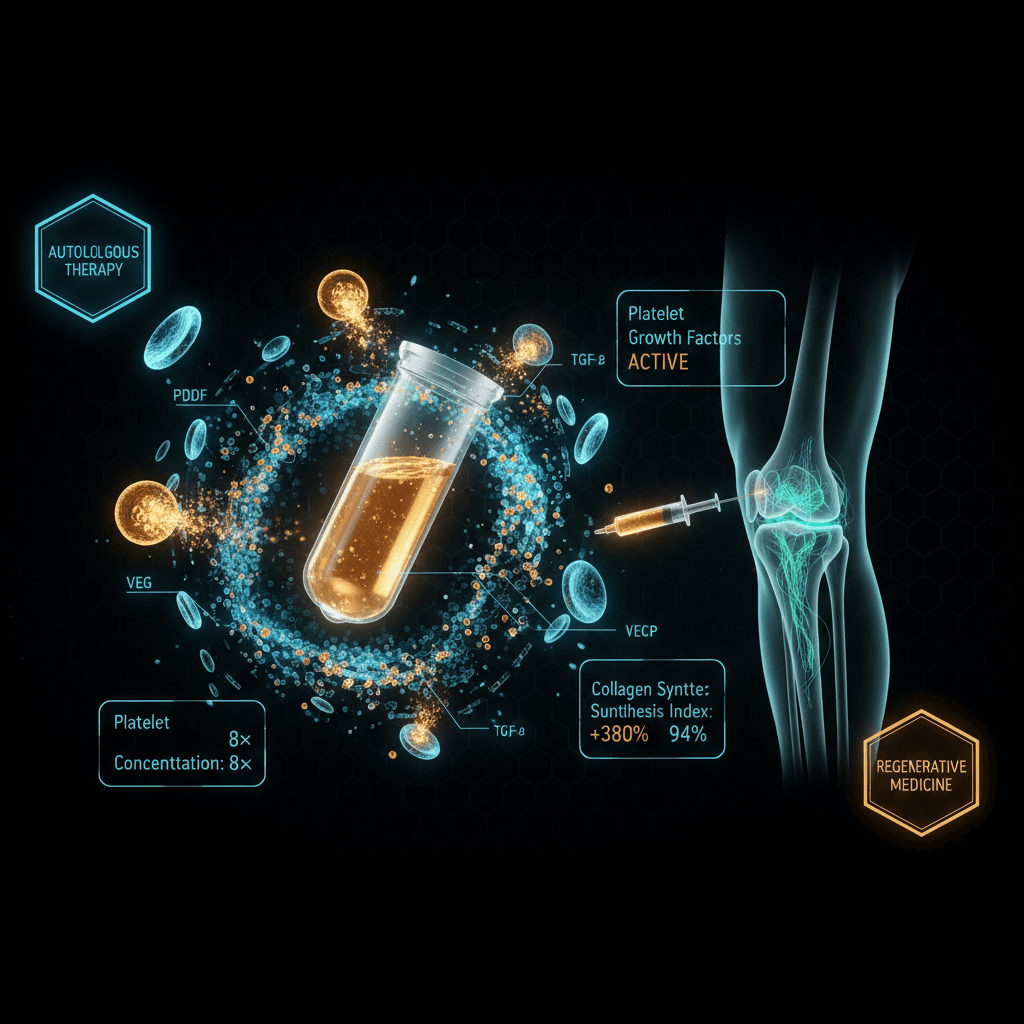
Platelet-rich plasma (PRP) therapy uses a concentrated sample of your own blood to treat injured tendons, worn joints and stubborn soft-tissue pain. At Queens Pain Clinic in Rego Park, a physician draws a small amount of blood, spins it in a centrifuge to concentrate the platelets, and injects the result into the painful area under ultrasound guidance. The appointment takes about 60 to 90 minutes, and you go home the same day. PRP is not a cure-all. It tends to work best for knee osteoarthritis and for tendon problems that have not settled with rest and physical therapy.
Key Features
Conditions Addressed
Top Benefits
An injection made from your own blood, with the platelets concentrated
Our office at 9701 66th Ave, Rego Park
Ultrasound, so the injection lands where the problem actually is
Roughly 60 to 90 minutes, including the blood draw and processing
Local numbing only, no general anesthesia
One to three injections, spaced a few weeks apart
Most people are back to normal routines within a few days, with some limits on sport and heavy lifting
1-877-97 NO PAIN
How Does PRP Therapy Work?
Platelets are best known for clotting, but they also carry growth factors, which are signaling proteins that help direct tissue repair. Tendons, ligaments and cartilage heal slowly because they get so little blood supply. An injury can stall, and the pain sticks around long after the original damage.
PRP tries to restart that process. Normal blood holds a certain number of platelets per milliliter. After centrifugation, the PRP we inject holds several times that amount, packed into a small volume. Placed directly into a damaged tendon or joint, those platelets release their growth factors on-site, which is meant to calm local irritation and encourage the tissue to rebuild.
Because the material comes from your own blood, there is no donor tissue and no synthetic drug involved. That keeps the risk of an allergic reaction or disease transmission very low, though no injection is entirely risk-free.
Growth factors are signaling proteins carried by platelets. Placed directly in a damaged tendon or joint, they are meant to calm local irritation and encourage tissue to rebuild.
What PRP Is Used to Treat
The research behind PRP is uneven, so it helps to separate what is well supported from what is still being worked out.
Several randomized trials and reviews show PRP can reduce pain and improve function in mild to moderate knee arthritis, often outperforming hyaluronic acid or saline over six to twelve months.
- Knee osteoarthritis
Results in studies are more mixed, but many people with these tendon problems respond.
- Tennis elbow and golfer's elbow (lateral and medial epicondylitis)
- Patellar tendinopathy (jumper's knee)
- Plantar fasciitis
- Rotator cuff tendinopathy
- Achilles tendinopathy
For this group the evidence is thinner. We only suggest PRP there when your imaging, exam and history point toward it, and we will be upfront about the uncertainty.
- Hip labral and hip joint pain
- Sacroiliac joint pain
- Facet joint arthritis in the neck or low back
- Shoulder instability
- Tissue healing after surgery
What Happens at Your PRP Appointment
Five steps, from your first evaluation to going home the same day.
Evaluation
Before any injection, we review your history, examine the area, and look at your imaging. If PRP is not the right call, we will say so.
Blood draw
A nurse or physician takes a sample from your arm, usually about 30 to 60 mL. It feels like any routine blood test.
Processing
The blood goes into a centrifuge for several minutes, and the platelet-rich layer is separated and prepared. Depending on the problem, your physician may choose a leukocyte-rich or leukocyte-poor preparation. In general, leukocyte-poor PRP is preferred for joints and leukocyte-rich for some tendon injuries.
Ultrasound-guided injection
The skin is cleaned and numbed. Using live ultrasound, the physician guides the needle to the tendon, ligament or joint space and delivers the PRP. This part usually takes only a few minutes.
Go home
You will rest briefly, get written aftercare instructions, and leave. If you would rather not drive afterward, especially following a hip or lower-body injection, bring someone along.
Recovery and What Results Look Like
Expect soreness at the injection site for a few days. A flare of aching or swelling in the first 48 to 72 hours is common and doesn't mean the treatment failed. Ice, rest and acetaminophen usually cover it.
We will tell you which medications to avoid: anti-inflammatory drugs such as ibuprofen are commonly paused around the time of the injection, so follow your physician's specific instructions.
PRP doesn't work overnight. Most people notice change gradually, somewhere between three and six weeks, and improvement can keep building for three months or longer.
We usually pair PRP with a structured physical therapy plan, since strengthening the area helps the repair last. Our on-site team can coordinate that.
PRP Compared with Cortisone and Prolotherapy
| Feature | PRP | Cortisone | Prolotherapy |
|---|---|---|---|
| What's injected | Concentrated platelets from your blood | A corticosteroid drug | A sugar (dextrose) solution |
| Goal | Support tissue repair | Reduce inflammation fast | Irritate tissue to prompt a healing response |
| Speed | Gradual, weeks to months | Often within days | Gradual, weeks to months |
| Typical relief | Months, sometimes longer | Weeks to a few months | Months |
| Main drawback | Usually not covered by insurance | Repeated doses can weaken tendon and cartilage | Less published evidence than PRP |
Cortisone is a reasonable tool for a short-term flare, and it is often the quickest way to calm things down. The concern is repetition: many injections into the same joint or tendon over the years can do harm. PRP is usually considered when cortisone has run its course or when you want to avoid it. If you are curious about the sugar-based option, read about our prolotherapy treatment.
Who PRP May or May Not Suit
Have had pain for months, haven't improved enough with rest, physical therapy or medication, and want an option short of surgery. It can also be an option if you aren't a surgical candidate.
- An active infection
- A bleeding or platelet disorder
- A cancer at or near the injection site
- Blood thinners that cannot be paused
Severe, bone-on-bone arthritis responds less predictably, and a full tear may need a surgical opinion instead. Your physician will go through all of this with you.
Serious complications are uncommon. Results vary from person to person, and some people see little benefit.
Temporary pain and swelling, bruising, and, rarely, infection, bleeding or irritation of a nearby nerve.
The centrifuge systems used to prepare PRP are cleared by the FDA, but using PRP for joint and tendon conditions is considered off-label. That is common in musculoskeletal medicine, and we will explain what it means for you.
Queens Pain Clinic has treated chronic pain in Queens since 2004. Our office is at 9701 66th Ave in Rego Park, close to Queens Boulevard and the M and R subway lines. Many of our PRP patients come from Forest Hills, Kew Gardens, Elmhurst, Middle Village, Flushing and Jackson Heights.
Phone: 1-877-97 NO PAIN
PRP is usually paired with rehabilitation. These pages may also help.
PRP Therapy FAQs
Ready to Find Out If PRP Fits?
If joint or tendon pain has outlasted rest, therapy and medication, come in for an evaluation. We will look at your imaging, examine the area, and tell you plainly whether PRP, another injection or a different approach makes the most sense.
9701 66th Ave, Rego Park, NY 11374
Phone: 1-877-97 NO PAIN
Treating chronic pain in Queens since 2004.
- Monday9:00 am to 6:00 pm
- Tuesday9:00 am to 6:00 pm
- WednesdayClosed
- Thursday9:00 am to 6:00 pm
- Friday9:00 am to 6:00 pm
- SaturdayClosed
- Sunday9:00 am to 3:00 pm
This page is for general information and is not medical advice. Results vary from person to person. Talk with a qualified clinician before starting a new treatment.