Epidural Steroid Injections
An epidural steroid injection places a corticosteroid, often with a local anesthetic, into the epidural space around the spinal nerves to reduce inflammation and relieve back, neck, arm or leg pain. It is done under X-ray guidance as a short outpatient procedure and does not cure the underlying condition.
Key Facts at a Glance
- Used to treat pain from irritated or compressed spinal nerves, such as sciatica or radiculopathy.
- Does not cure the underlying condition, but can calm inflammation enough to allow rehabilitation to progress.
- Performed as an outpatient procedure — most people go home the same day.
- Pain relief often begins in 2 to 7 days and can take up to 2 weeks.
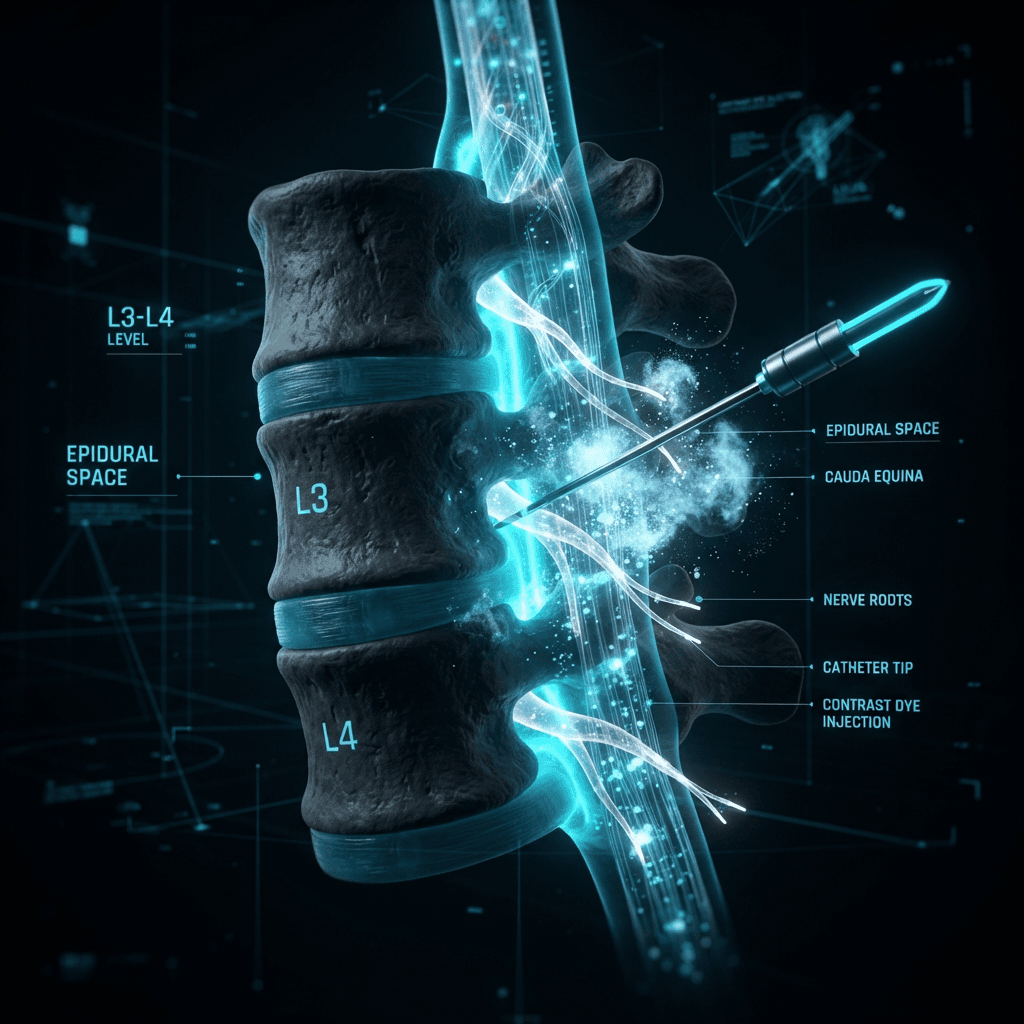
Quick Facts
| Question | Short Answer |
|---|---|
| What is injected | Corticosteroid, usually with a local anesthetic |
| Where | The epidural space, the fat-filled area outside the membrane covering the spinal cord and nerves |
| Guidance | Fluoroscopy (live X-ray) with contrast dye, or sometimes CT |
| Duration of procedure | About 10 to 20 minutes |
| Anesthesia | Local numbing; sedation optional |
| Recovery | Most people go home the same day and resume light activity within 24 to 48 hours |
| Pain relief onset | Often 2 to 7 days; can take up to 2 weeks |
| Relief duration | Days to several months, varying by condition and person |
| Typical series | 1 to 3 injections per treatment episode, spaced weeks apart |
| Best for | Radiating nerve pain (radiculopathy, sciatica), spinal stenosis, disc herniation |
Types of Epidural Injections
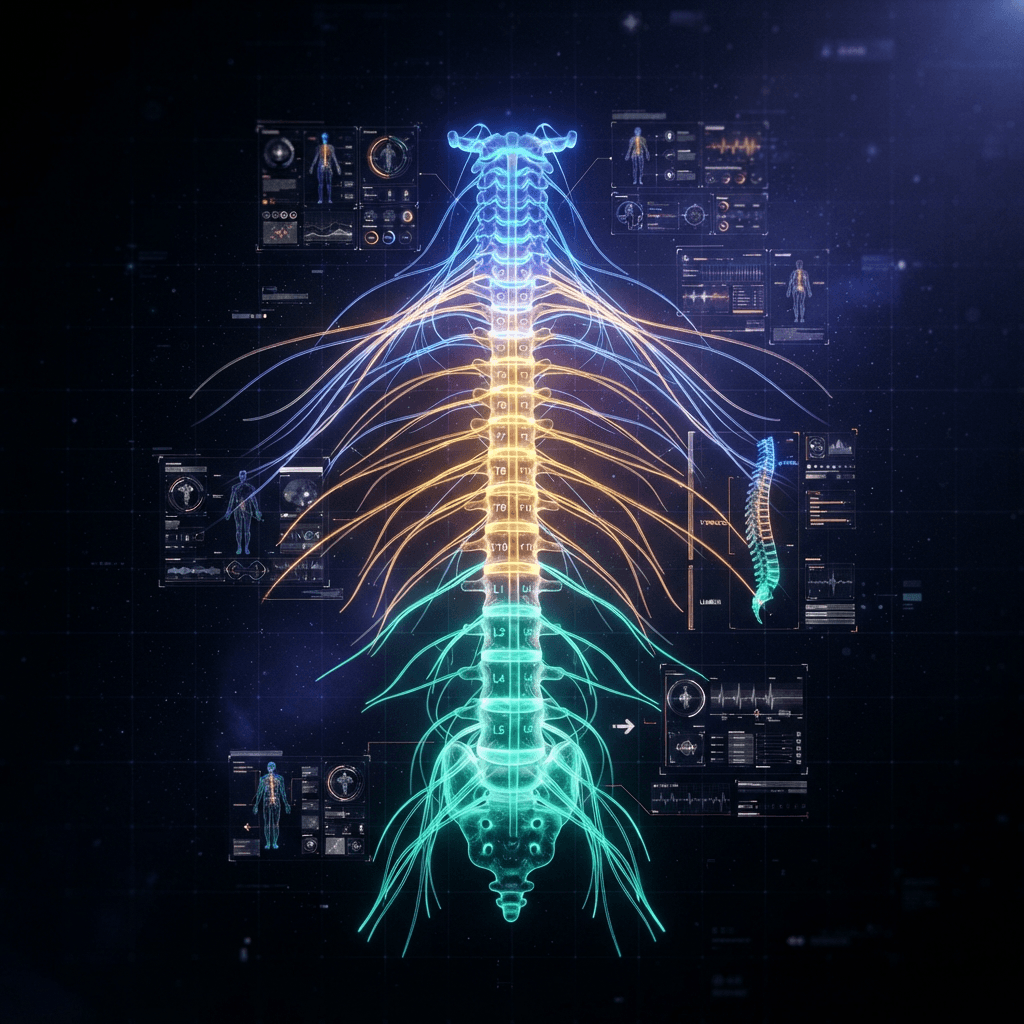
Epidural injections are named by the approach used to reach the epidural space — interlaminar, transforaminal, or caudal — and by the spinal region treated: cervical, thoracic, or lumbar. Your physician chooses the approach based on where the irritated nerve is, your imaging, and your anatomy.
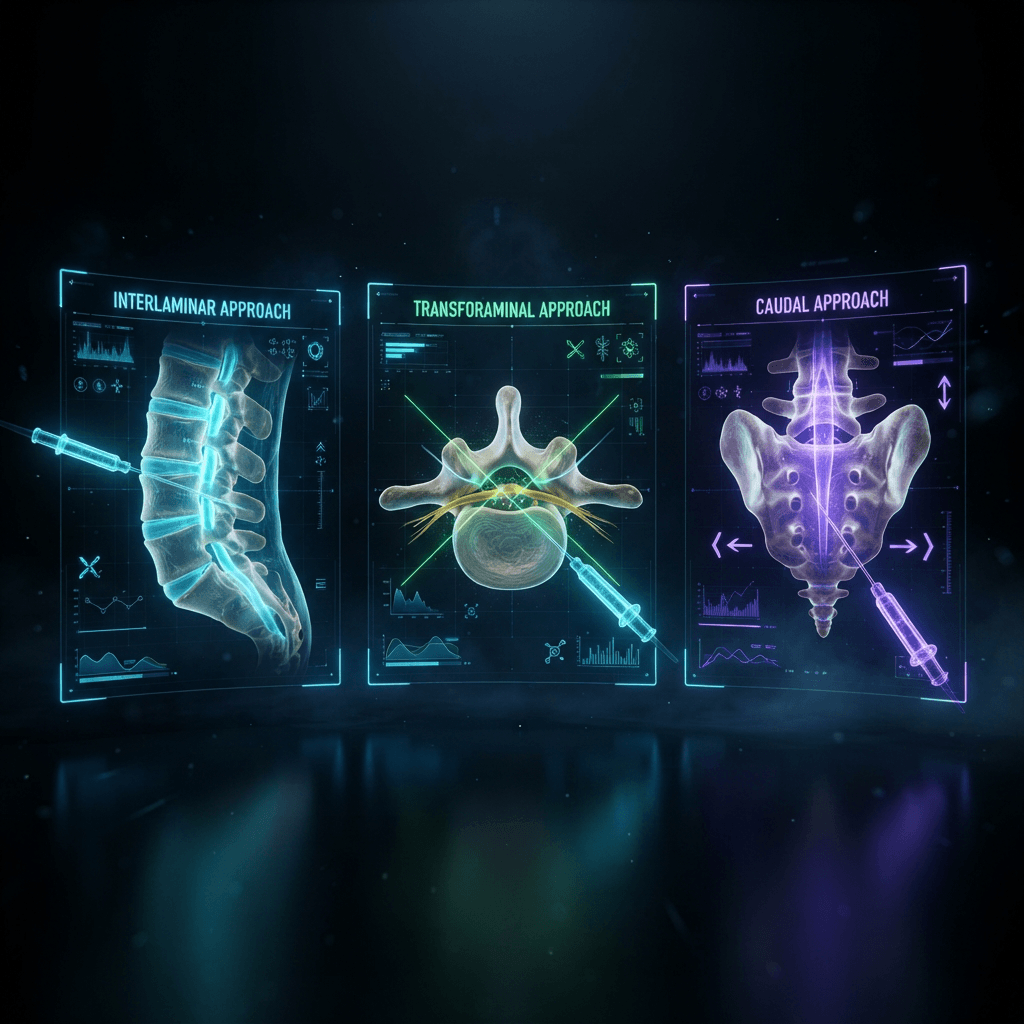
By Approach
| Type | How the Needle Reaches the Target | Typically Used For | Notes |
|---|---|---|---|
| Interlaminar ESI | Between two vertebral arches (laminae), straight toward the epidural space | Central or multi-level disc herniation, spinal stenosis, bilateral symptoms | Medication spreads across a wider area |
| Transforaminal ESI | Through the foramen, the opening where a nerve root exits the spine | One-sided radiculopathy from a specific nerve root | Most targeted; also used diagnostically as a selective nerve root block |
| Caudal ESI | Through the sacral hiatus at the base of the spine | Low back and leg pain, post-surgical pain, multi-level lumbar problems | Gentler entry point; often chosen after back surgery |
By Spinal Region
Cervical epidural
Pain Pattern Treated
Neck pain, arm pain, numbness or tingling in the hand
Common Causes
Cervical disc herniation, cervical radiculopathy, foraminal stenosis
Thoracic epidural
Pain Pattern Treated
Mid-back or chest wall pain, shingles-related pain
Common Causes
Thoracic disc problems, post-herpetic neuralgia
Lumbar epidural
Pain Pattern Treated
Low back pain, buttock and leg pain (sciatica)
Common Causes
Lumbar disc herniation, lumbar spinal stenosis, degenerative disc disease
Terms Patients Search For
Epidural steroid injection (ESI), cortisone shot in the back, spinal injection
Common names for the same family of procedures.
Selective nerve root block (SNRB)
A transforaminal injection used to confirm which nerve is causing pain and to treat it.
Labor epidural
A different procedure that delivers anesthetic through a catheter for childbirth. It is not the same as a pain-management steroid injection.
Benefits of Epidural Injections
Epidural injections place anti-inflammatory medicine right where the nerve is irritated, giving many patients enough relief to move, exercise and progress in rehabilitation.
Epidural steroid injections are a well-established, non-surgical way to calm nerve-related pain. They treat inflammation, not the underlying cause, so they work best alongside rehabilitation.
- Best for pain from irritated spinal nerves
- Relief typically starts in days and can last weeks to months
- Does not cure the underlying condition
- Needs individual evaluation by a pain specialist
Medical Disclaimer
This page is for educational purposes only and does not constitute medical advice. Epidural steroid injections are medical procedures that require individual evaluation by a licensed physician. The information here is based on published clinical evidence and is reviewed periodically. Always consult a qualified pain management specialist before making any treatment decisions.
Ready to Discuss Epidural Injections?
Our board-certified pain management specialists at Queens Pain Clinic will evaluate your imaging, symptoms, and history to determine whether an epidural steroid injection is right for you.