Knee Pain Treatment
in Queens, NY
Non-surgical care from board-certified pain specialists in Rego Park.
Knee pain usually traces back to one of five places: worn cartilage (osteoarthritis), a torn meniscus, a strained ligament, an irritated tendon or bursa, or a pinched or overactive nerve. Surveys suggest roughly one in four adults deal with frequent knee pain.
Queens Pain Clinic works out which one is behind your pain, then treats it with image-guided injections, PRP, genicular nerve ablation and targeted physical therapy. For many patients, that means relief without an operating room.
Last reviewed October 2026
Knee pain usually traces back to one of five places: worn cartilage (osteoarthritis), a torn meniscus, a strained ligament, an irritated tendon or bursa, or a pinched or overactive nerve. At Queens Pain Clinic in Rego Park, we figure out which one is behind your pain, then treat it with ultrasound- or fluoroscopy-guided injections, PRP, genicular nerve ablation and targeted physical therapy. For many patients, that means getting relief without an operating room. If surgery is the better answer, we will say so and refer you. We can often see new patients the same day.
Image-guided injections · PRP · Genicular nerve ablation · Physical therapy
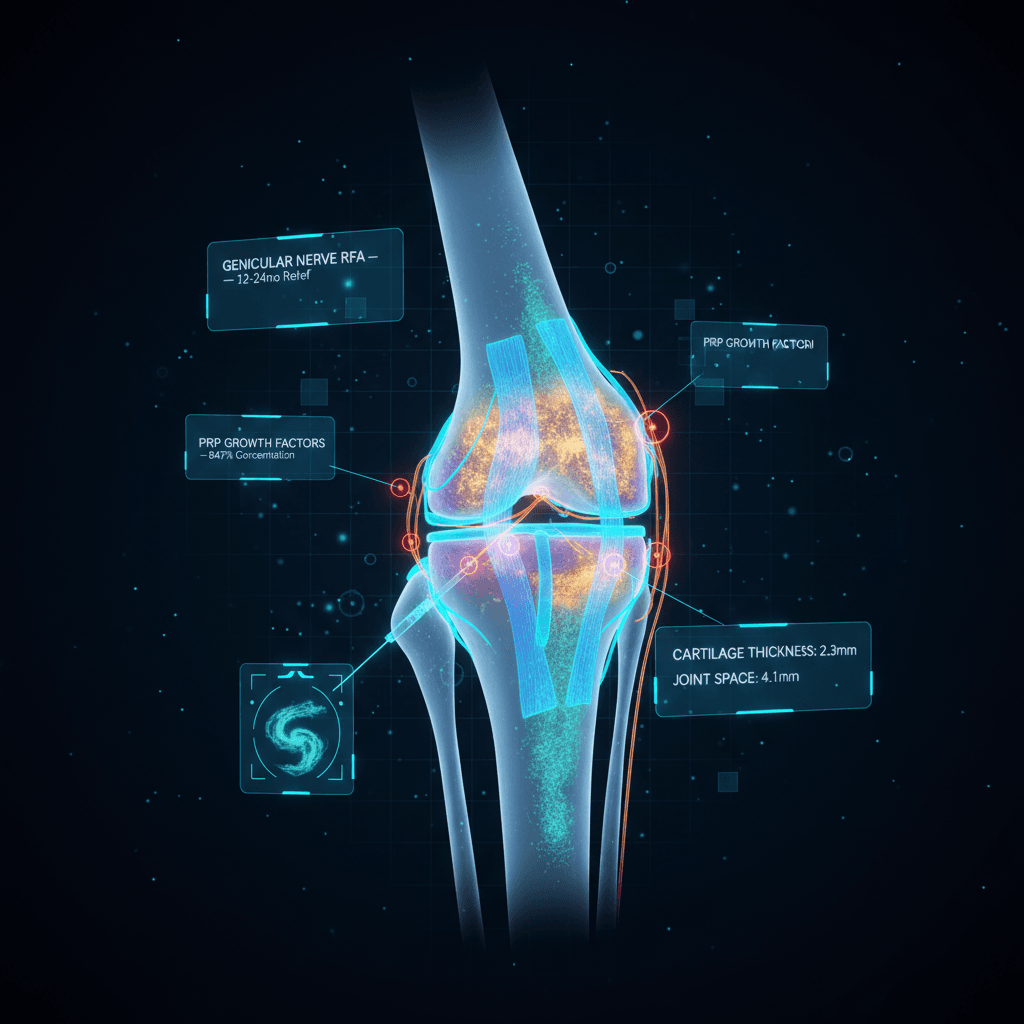
Knee pain from cartilage, meniscus, ligament, tendon, bursa or nerve, treated without surgery whenever reasonable
Surveys suggest roughly one in four adults deal with frequent knee pain
9701 66th Ave, Rego Park, NY 11374
Mon, Tue, Thu, Fri 9 am to 6 pm. Sun 9 am to 3 pm. Closed Wed and Sat
Call 1-877-97 NO PAIN. We can often see new patients the same day
Five Places It Usually Comes From
Knee pain usually traces back to one of five places: worn cartilage (osteoarthritis), a torn meniscus, a strained ligament, an irritated tendon or bursa, or a pinched or overactive nerve. At Queens Pain Clinic in Rego Park, we figure out which one is behind your pain, then treat it with ultrasound- or fluoroscopy-guided injections, PRP, genicular nerve ablation, and targeted physical therapy. For many patients, that means getting relief without an operating room.
If your knee has hurt for more than a couple of weeks, or the pain keeps coming back, it's worth having someone look at it properly. We can often see new patients the same day.
Why Does My Knee Hurt?
Knee pain is common. Surveys suggest roughly one in four adults deal with frequent knee pain, and the cause changes a lot with age and activity. A 22-year-old runner and a 68-year-old with stiff mornings usually have different problems, even if both say “my knee hurts.”
Here's how the common causes tend to show up.
Osteoarthritis
Stiffness after sitting or in the morning, aching that worsens with stairs or long walks, sometimes a grinding feeling.
Meniscus tear
Catching or locking, pain when twisting or squatting, swelling that builds over a day or two.
Ligament injury (ACL, PCL, MCL, LCL)
A pop at the time of injury, then swelling and a sense that the knee might give way.
Patellar tendinopathy (“jumper’s knee”)
Pain just below the kneecap that flares with jumping, running, or climbing stairs.
Bursitis (prepatellar or pes anserine)
Localized swelling or tenderness on the front or inner side of the knee, often after kneeling or overuse.
Patellofemoral pain
Dull ache around or behind the kneecap, worse going downstairs or after sitting a long time.
Baker’s cyst
Fullness or tightness behind the knee, sometimes with a visible bulge.
IT band or plica irritation
Outer-knee pain in runners and cyclists, or a snapping sensation along the inner kneecap.
Nerve involvement
Burning or sharp pain that doesn’t match movement; sometimes pain referred from the lower back.
Some people have more than one thing going on. A knee with arthritis can also have a torn meniscus, and a back problem can mimic a knee problem. That's why we don't start with a treatment. We start with a diagnosis. Pain that seems to come from the hip or back is covered on our hip pain and low back pain pages.
How We Diagnose Knee Pain
Your first visit is mostly conversation and hands-on examination. We'll ask when the pain started, what makes it better or worse, what you've already tried, and what you want to be able to do again (climb stairs, play with grandkids, get through a shift on your feet).
Then we examine the knee, hip, and lower back, watch how you walk, and test stability and strength. If imaging would change the plan, we order it, or we review X-rays and MRI you already have. Sometimes a diagnostic injection helps too: if numbing a specific spot or nerve takes the pain away, we've found the source.
You leave with a clear explanation of what's wrong and a plan you've had a say in.
Knee Pain Treatments We Offer
We try to match the treatment to the cause, and we tell you honestly what each option can and can't do.
Physical therapy and activity changes
For most knee problems, strength and movement work is part of the plan, not an afterthought. Stronger quadriceps and hip muscles take load off the joint, and gait or footwork changes can remove the habit that’s been aggravating the problem. We pair therapy with injections when it makes sense, because relief gives you a window to rebuild.
Corticosteroid injections
These calm inflammation in a flared joint or an irritated bursa. Many people notice a difference within a few days. The relief is usually temporary, from weeks to a few months, and we space injections out rather than repeating them often.
Hyaluronic acid (viscosupplementation)
A gel-like lubricant injected into the joint for knee osteoarthritis. Some patients get meaningful relief for several months; others don’t notice much. Research on its benefit is mixed and guidelines differ, so we talk through whether it’s a reasonable try for you, and whether your insurance will cover it.
PRP (platelet-rich plasma)
We draw a small amount of your blood, concentrate the platelets, and inject them into the joint or around the damaged tendon, guided by ultrasound. PRP is most studied for mild to moderate knee osteoarthritis, and results across studies suggest it can reduce pain and improve function for many patients, though not everyone responds. It usually takes several weeks to build. PRP is often not covered by insurance, and we’ll tell you the cost before you decide.
Prolotherapy
Dextrose injections placed around loose or irritated ligaments and tendons. It’s an option for some chronic soft-tissue problems, and we’ll tell you plainly when we think another approach has better evidence.
Genicular nerve radiofrequency ablation (RFA)
If arthritis pain hasn’t responded to other care and you aren’t ready for, or aren’t a candidate for, knee replacement, this is worth knowing about. Using fluoroscopy, we place a thin probe next to the small nerves that carry pain signals from the knee, and use heat to quiet them. We first run a numbing test: if it brings your pain down meaningfully, you’re a good candidate. Relief builds over a few weeks and often lasts somewhere between six months and a year or longer. Nerves can regrow, and the procedure can be repeated. It doesn’t repair the joint; it reduces the pain signal.
Do I Need Surgery?
Sometimes, yes. We'd rather say so than keep you in treatment that isn't working. A bucket-handle meniscus tear that locks the knee, a complete ligament rupture in an active person, or advanced arthritis with severe deformity may point toward an orthopedic surgeon. If that's you, we'll refer you and can help with pain control before and after.
For many other knee problems, non-surgical care is a reasonable first step, and for some patients it delays surgery for years.
Make an appointment if:
- Pain has lasted more than two weeks without improving
- Your knee swells repeatedly, locks, or gives way
- Stairs, getting out of chairs, or walking have become difficult
- Pain wakes you at night
- You’re relying on over-the-counter painkillers most days
- Your knee is hot, red, and swollen and you have a fever
- You can’t put any weight on the leg after an injury
- The knee looks deformed
- Your calf is swollen, warm, and painful (this can signal a blood clot)
Photo ID, insurance card, any imaging or reports on your knee, and a list of your medications.
Plan on about an hour for a first visit.
If the exam shows an injection would help, we can often do it that day, but we never rush into a procedure.
Some soreness for a day or two is common. We’ll give you specific instructions for your treatment, including what to avoid and when to follow up.
We also see knee injuries from car accidents and workplace incidents. If that's your situation, mention it when you call so we can help with the paperwork. See our pages on Auto Injury and Worker's Comp.
Knee Pain FAQ
Tired of Planning Your Day Around Your Knee?
Call 1-877-97 NO PAIN or request an appointment online. We'll work out what's causing the pain and talk through your options.
Queens Pain Clinic
9701 66th Ave, Rego Park, NY 11374
Phone: 1-877-97 NO PAIN
- Monday9:00 am to 6:00 pm
- Tuesday9:00 am to 6:00 pm
- WednesdayClosed
- Thursday9:00 am to 6:00 pm
- Friday9:00 am to 6:00 pm
- SaturdayClosed
- Sunday9:00 am to 3:00 pm
We treat patients from across Queens, including Forest Hills, Elmhurst, Kew Gardens, Flushing, and Jackson Heights, as well as Brooklyn, Manhattan, and Long Island. See our Insurance and Payment Options pages, or call and we'll check your coverage.
Last reviewed October 2026. This page is for general information and isn't medical advice. Results vary from person to person. Talk with a qualified physician before starting any treatment.