Sacroiliac Joint Injections
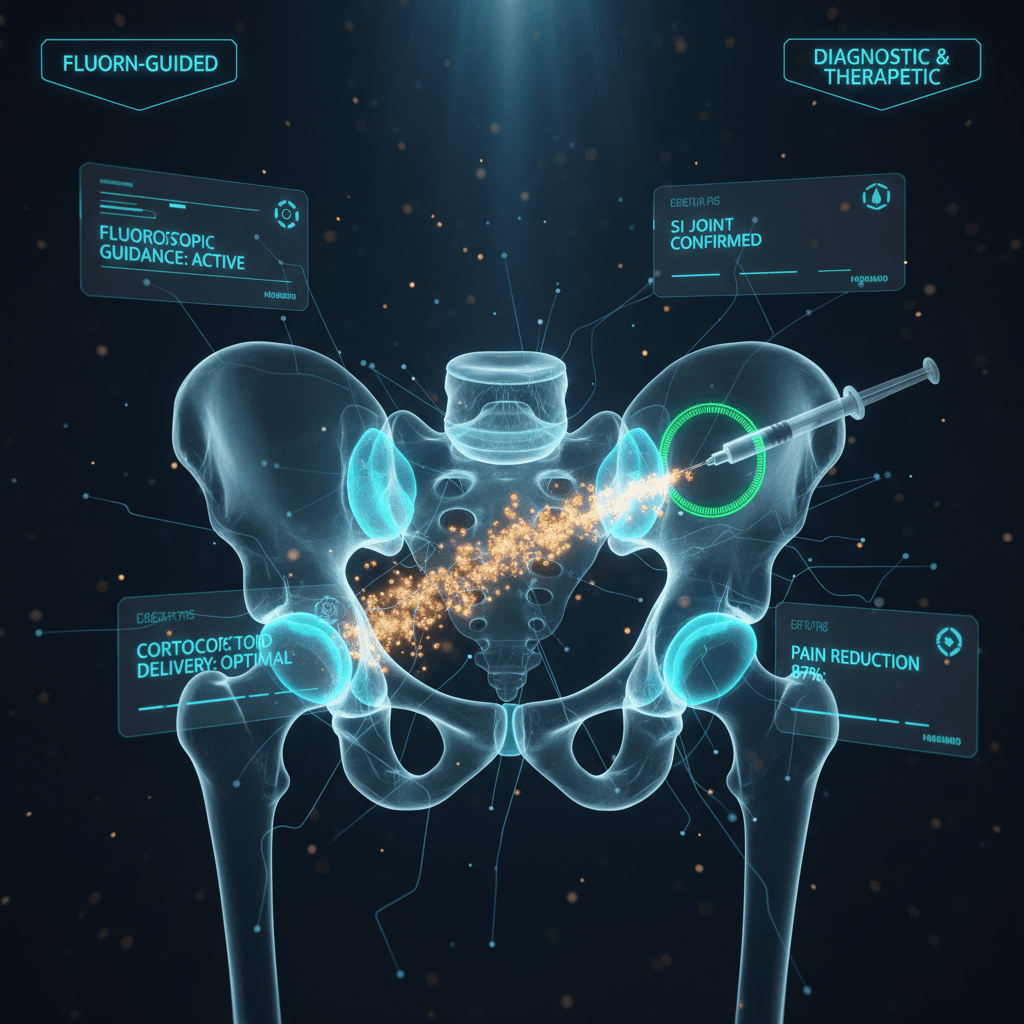
A sacroiliac (SI) joint injection delivers a corticosteroid and local anesthetic into or around the joint where the sacrum meets the pelvis. The SI joint causes roughly 15–30% of chronic low back pain. The injection both confirms the joint as the pain source and treats the inflammation.
Key Facts at a Glance
- The SI joint accounts for 15–30% of chronic low back pain — often underdiagnosed.
- Pain typically presents in the buttock, low back, groin, or posterior thigh.
- The injection serves as both a diagnostic block and a therapeutic treatment.
- A positive response can qualify a patient for lateral branch radiofrequency ablation for longer-term relief.
Quick Facts
| Question | Short Answer |
|---|---|
| What is injected | Corticosteroid combined with a local anesthetic |
| Target location | The sacroiliac joint — where the sacrum meets the iliac bone of the pelvis |
| Guidance | Fluoroscopy (live X-ray) with contrast dye confirmation; ultrasound also used |
| Duration of procedure | Approximately 15 to 30 minutes |
| Anesthesia | Local numbing; IV sedation optional |
| Recovery | Same-day discharge; light activity within 24 to 48 hours |
| Pain relief onset | Often within 2 to 5 days; can take up to 1 week |
| Relief duration | Weeks to several months depending on the individual and underlying cause |
| Typical series | 1 to 3 injections per treatment episode, spaced weeks apart |
| Best for | SI joint dysfunction, sacroiliitis, post-partum pelvic pain, post-fusion SI pain |
Types of SI Joint Procedures
SI joint treatment follows a stepwise approach — from diagnostic injection to therapeutic injection to radiofrequency ablation for longer-term relief. Regenerative options such as prolotherapy and PRP are also available for patients with ligament laxity or hypermobility.
| Procedure | Description | Typically Used For | Notes |
|---|---|---|---|
| Intra-articular SI Joint Injection | Corticosteroid and anesthetic placed directly inside the SI joint space | Active joint inflammation, sacroiliitis, arthritis of the SI joint | Provides direct anti-inflammatory effect; also serves as a diagnostic block |
| SI Joint Lateral Branch Block | Local anesthetic targets the lateral branch nerves supplying the SI joint | Diagnostic confirmation before radiofrequency ablation of lateral branches | Two positive blocks typically required before proceeding to RFA |
| Lateral Branch Radiofrequency Ablation | Heat energy delivered to ablate the lateral branch nerves of the SI joint | Long-term relief after confirmed positive lateral branch blocks | Can provide 6–18 months of relief; nerve regenerates over time |
| Prolotherapy / PRP | Regenerative injection targeting the SI joint ligaments and capsule | SI joint ligament laxity, hypermobility, post-partum instability | Aims to strengthen the joint rather than suppress inflammation |
Common Pain Patterns
Buttock & Hip Pain
Description
Deep aching pain in one or both buttocks, often mistaken for hip joint pathology
Common Triggers
Prolonged sitting, rising from a chair, climbing stairs
Low Back Pain
Description
Unilateral or bilateral low back pain below the L5 level, near the PSIS
Common Triggers
Bending forward, twisting, prolonged standing
Groin & Thigh Referral
Description
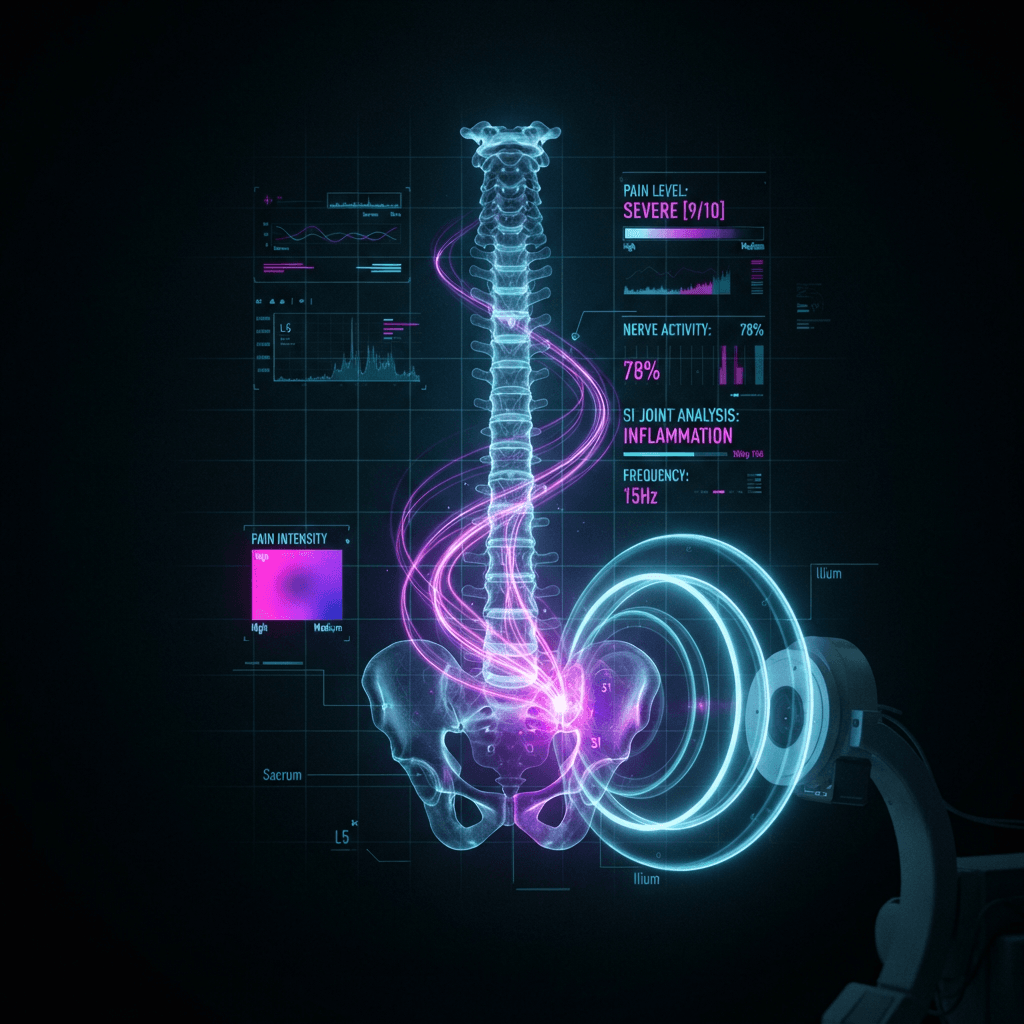
Pain radiating into the groin, inner thigh, or posterior thigh — can mimic sciatica
Common Triggers
Walking, weight-bearing on one leg, transitional movements
Terms Patients Search For
SI joint injection, sacroiliac block, SIJ injection
Common clinical and patient-facing names for the same procedure.
Sacroiliitis
Inflammation of the sacroiliac joint — a common cause of SI joint pain and a primary indication for SI joint injection.
Posterior superior iliac spine (PSIS)
The bony landmark at the back of the pelvis used to locate the SI joint during physical examination and injection guidance.
Benefits of SI Joint Injections
SI joint injections give two answers at once: whether the joint is causing your pain, and relief from the inflammation inside it.
SI joint injections are a useful way to diagnose and treat a common but often missed source of low back pain. Response guides what comes next.
- Diagnostic and therapeutic in one procedure
- Relief duration varies between patients
- Best combined with rehabilitation
- Needs individual evaluation by a pain specialist
Medical Disclaimer
This page is for educational purposes only and does not constitute medical advice. Sacroiliac joint injections are medical procedures that require individual evaluation by a licensed physician. The information here is based on published clinical evidence and is reviewed periodically. Always consult a qualified pain management specialist before making any treatment decisions.
Ready to Discuss Sacroiliac Joint Injections?
Our board-certified pain management specialists at Queens Pain Clinic will evaluate your pelvic pain, imaging, and history to determine whether an SI joint injection is right for you.