Trigger Point Injections
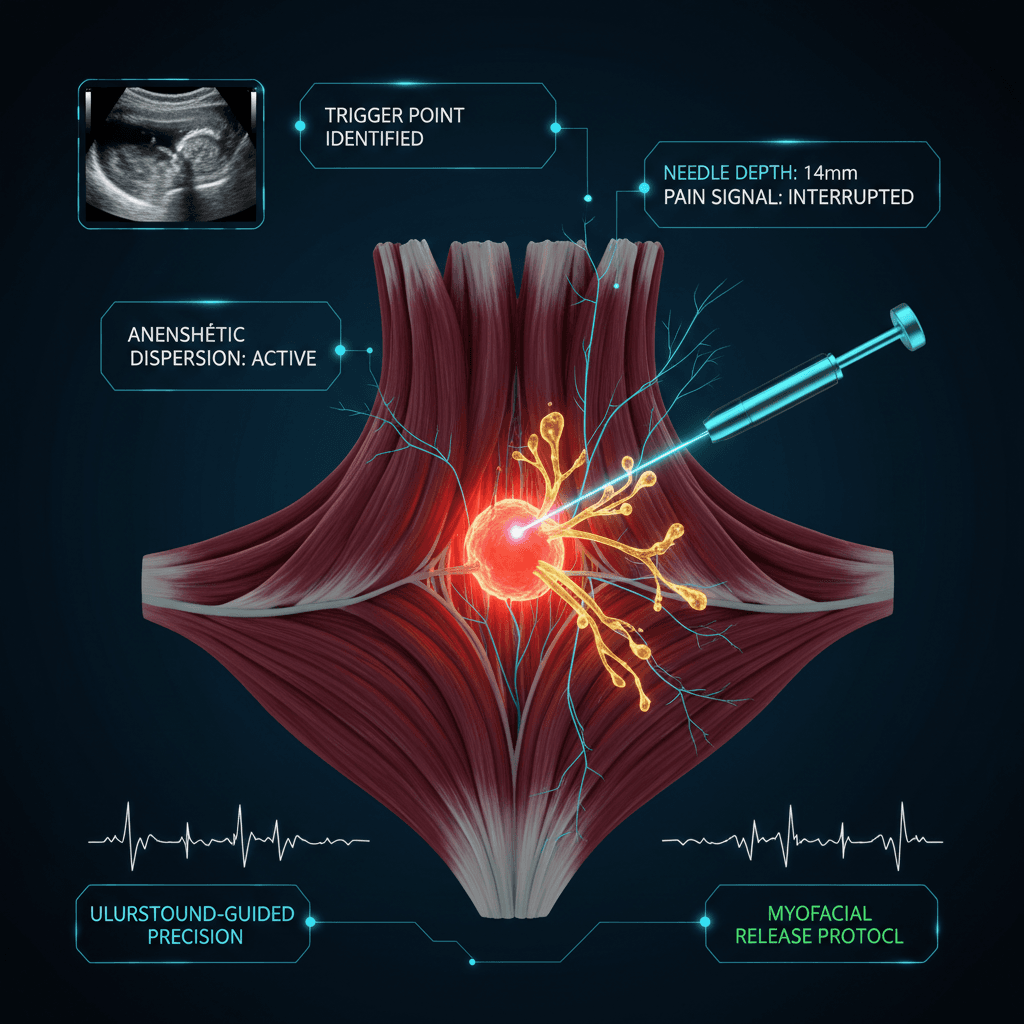
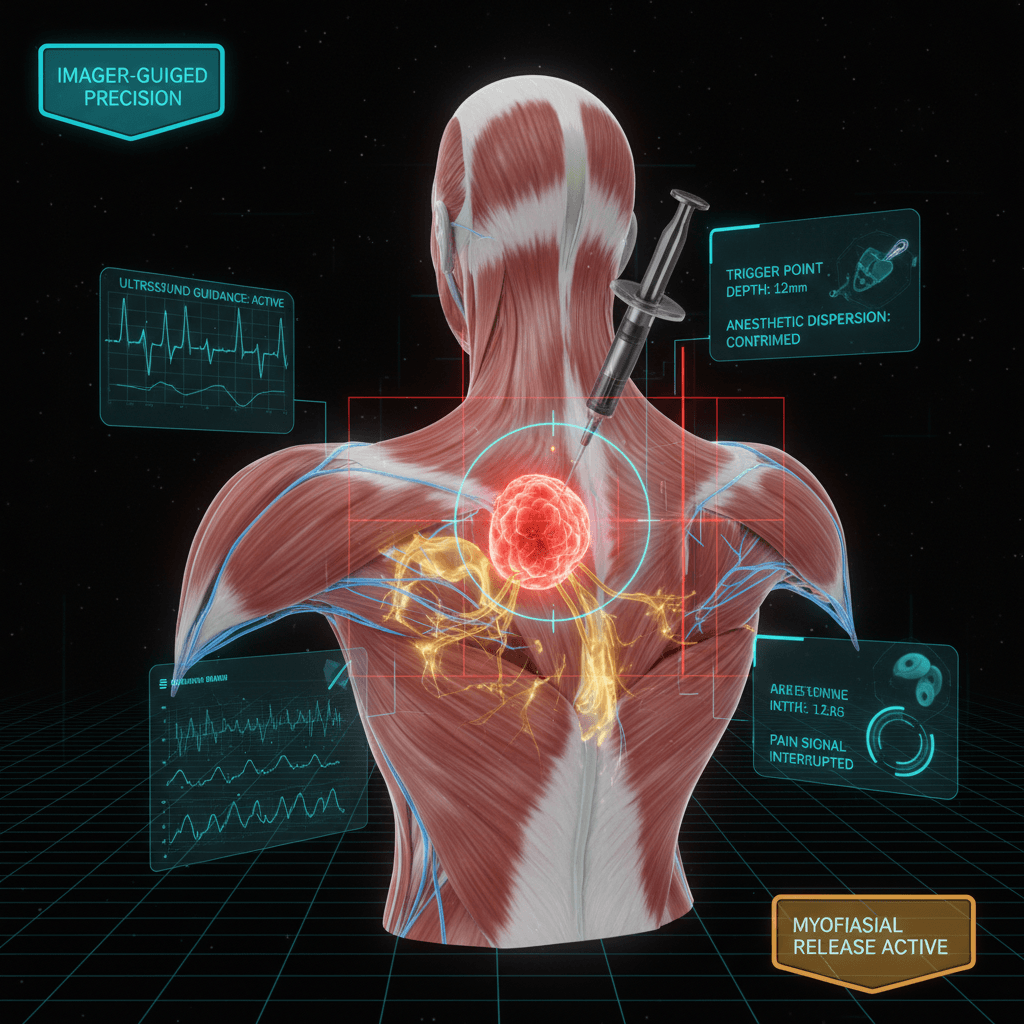
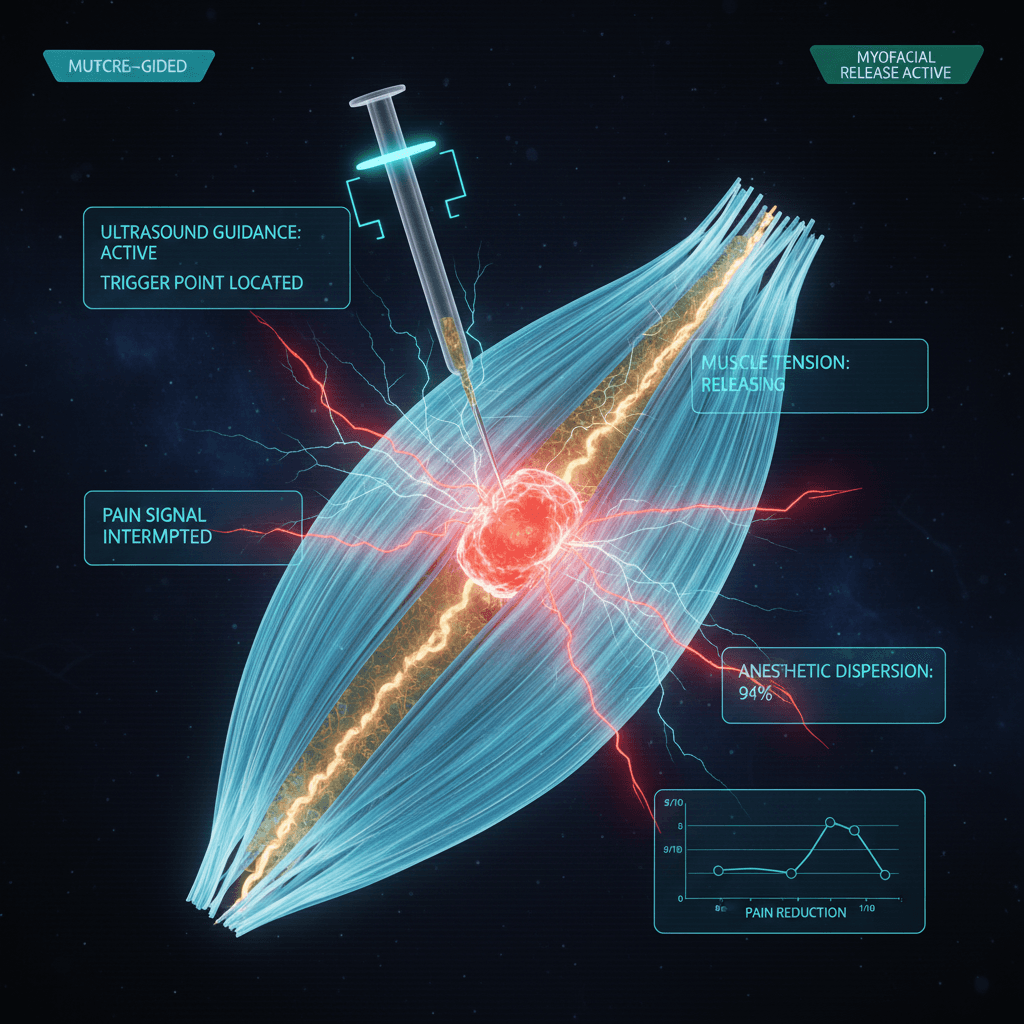
A trigger point injection delivers a local anesthetic, with or without a corticosteroid, directly into a tight, irritable knot in a muscle. It relaxes the muscle and interrupts the pain cycle, with relief lasting days to weeks. It is often combined with physical therapy for lasting benefit.
Key Facts at a Glance
- Targets myofascial trigger points — the "knots" in muscles that cause local and referred pain.
- Can be performed with local anesthetic, corticosteroid, botulinum toxin, or dry needling.
- Most effective when combined with physical therapy and stretching.
- Immediate local relief is common; full benefit develops over 24 to 72 hours.
Quick Facts
| Question | Short Answer |
|---|---|
| What is injected | Local anesthetic (lidocaine or bupivacaine), with or without corticosteroid; dry needling uses no injectate |
| Target location | Myofascial trigger points — hyperirritable nodules within taut bands of skeletal muscle |
| Guidance | Palpation-guided; ultrasound guidance used for deeper muscles |
| Duration of procedure | Approximately 10 to 20 minutes depending on the number of sites treated |
| Anesthesia | The injection itself contains local anesthetic; no additional anesthesia typically needed |
| Recovery | Same-day return to light activity; post-injection soreness normal for 24–48 hours |
| Pain relief onset | Often immediate local relief; full benefit develops over 24 to 72 hours |
| Relief duration | Days to weeks; repeated sessions often needed for chronic myofascial pain |
| Typical series | Series of 3 to 6 sessions, often combined with physical therapy |
| Best for | Myofascial pain syndrome, tension headache, neck and shoulder pain, fibromyalgia |
Types of Trigger Point Injections
Trigger point injections vary by the injectate used. Your physician selects the approach based on the severity of your trigger points, your medical history, and whether a longer-acting agent such as botulinum toxin is warranted for refractory cases.
| Type | Description | Typically Used For | Notes |
|---|---|---|---|
| Wet Needling (Local Anesthetic) | Injection of lidocaine or bupivacaine directly into the trigger point | Active trigger points causing local and referred pain | Most common approach; anesthetic disrupts the trigger point and provides immediate relief |
| Corticosteroid Injection | Steroid added to the local anesthetic for additional anti-inflammatory effect | Trigger points with significant local inflammation or in patients with inflammatory conditions | Used selectively; frequency limited to avoid tissue atrophy |
| Dry Needling | Needle inserted into the trigger point without any injectate | Myofascial pain when medication is not desired or contraindicated | Mechanical disruption of the trigger point; often performed by physical therapists |
| Botulinum Toxin (Botox) | Botulinum toxin injected to block neuromuscular transmission at the trigger point | Refractory trigger points, chronic myofascial pain, cervicogenic headache | Longer duration of effect (3–4 months); used when standard injections provide insufficient relief |
Commonly Treated Muscle Groups
Cervical & Shoulder Muscles
Key Muscles
Trapezius, levator scapulae, sternocleidomastoid, scalenes
Pain Pattern
Neck pain, shoulder pain, tension headache, jaw pain
Thoracic & Paraspinal Muscles
Key Muscles
Rhomboids, thoracic erector spinae, serratus posterior
Pain Pattern
Mid-back pain, rib pain, interscapular aching
Lumbar & Gluteal Muscles
Key Muscles
Quadratus lumborum, gluteus medius, piriformis, iliopsoas
Pain Pattern
Low back pain, buttock pain, hip pain, pseudo-sciatica
Terms Patients Search For
Myofascial trigger point injection, TPI, muscle injection
Common clinical and patient-facing names for the same procedure.
Myofascial pain syndrome (MPS)
A chronic pain condition characterized by trigger points in muscles — the primary indication for trigger point injections.
Referred pain
Pain felt at a location distant from the trigger point — a hallmark of myofascial pain that helps identify which muscle to treat.
Benefits of Trigger Point Injections
Trigger point injections are a fast, simple way to release painful muscle knots and break the cycle of muscle pain and tightness.
Trigger point injections are a practical, low-risk treatment for muscle pain. They work best as part of a plan that includes stretching, strengthening and posture work.
- Best for localized muscle knots and myofascial pain
- Relief usually lasts days to weeks
- Often paired with physical therapy for lasting results
- Needs individual evaluation by a physician
Medical Disclaimer
This page is for educational purposes only and does not constitute medical advice. Trigger point injections are medical procedures that require individual evaluation by a licensed physician. The information here is based on published clinical evidence and is reviewed periodically. Always consult a qualified pain management specialist before making any treatment decisions.
Ready to Discuss Trigger Point Injections?
Our board-certified pain management specialists at Queens Pain Clinic will evaluate your muscle pain patterns, trigger points, and history to determine whether trigger point injections are right for you.