Spinal Injections in Rego Park, Queens
A spinal injection places a corticosteroid and a local anesthetic next to an irritated spinal nerve, guided by live X-ray. It is used for sciatica and other arm or leg pain caused by a bulging disc or a narrowed spinal canal.
The visit is outpatient and usually takes 15 to 30 minutes, with local numbing only. You go home the same day. Queens Pain Clinic has been treating pain in Queens since 2004.
Last reviewed October 2026
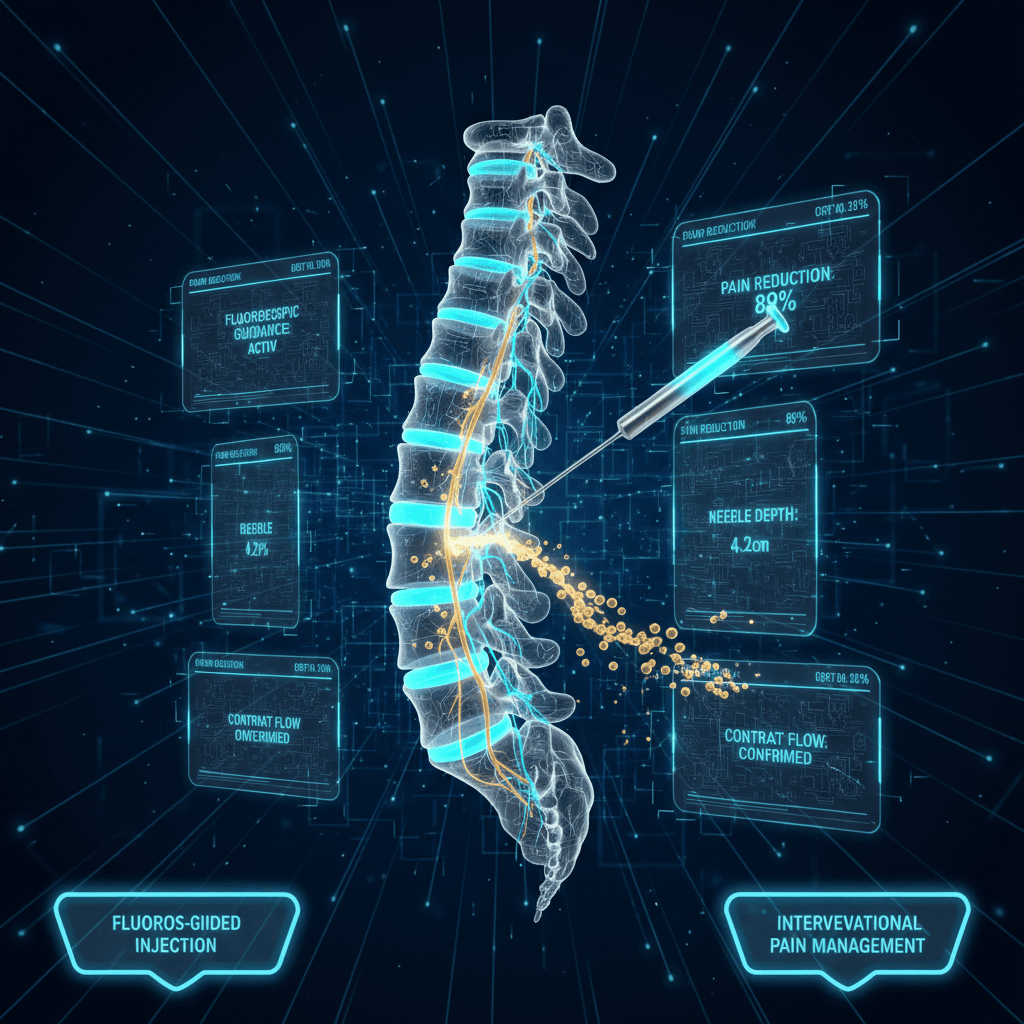
Spinal injections place a corticosteroid and a local anesthetic beside an irritated spinal nerve, using live X-ray (fluoroscopy) to guide the needle. They are used for pain that travels into an arm or leg, such as sciatica from a herniated disc or spinal narrowing. The visit is outpatient, usually takes 15 to 30 minutes, uses local numbing rather than general anesthesia, and you go home the same day. The anesthetic can numb the pain within minutes for a few hours. The steroid usually starts working in a few days and can take up to two weeks. Relief varies from a few weeks to several months, and some people get little or none. An injection reduces inflammation so you can move and build strength. It does not reshape a disc or widen a narrowed canal.
Conditions Addressed
Top Benefits
- Targets the inflamed nerve root that is causing arm or leg pain, numbness or tingling
- Local anesthetic can numb the pain within minutes, which helps show which nerve level is involved
- Steroid reduces inflammation around the nerve, usually starting in a few days
- Outpatient visit of about 15 to 30 minutes, with no general anesthesia and no hospital stay
- Pain relief can make it easier to move and get the most out of physical therapy
- May help some people avoid or delay surgery, though it cannot promise to prevent an operation
A corticosteroid and local anesthetic injected beside an irritated spinal nerve
Live X-ray (fluoroscopy), with a small amount of contrast dye to confirm spread
Usually 15 to 30 minutes, outpatient, home the same day
Local numbing of the skin. No general anesthesia
Numbs pain within minutes for a few hours
Usually begins in a few days and can take up to two weeks
A few weeks to several months. Results vary
9701 66th Ave, Rego Park, NY 11374
How Do Spinal Injections Relieve Pain?
A bulging disc or a narrowed spinal canal can pinch and inflame a nerve root. That inflammation is often what sends pain, numbness or tingling down an arm or leg. The injection aims to reduce it.
Two medicines work on different timelines. The local anesthetic numbs the area within minutes but wears off in hours. The corticosteroid takes longer. It usually starts working in a few days and can take up to two weeks.
Live X-ray (fluoroscopy) and a small amount of contrast dye let the physician confirm that the medication spreads where it is meant to go. Numbing one specific nerve can also show which level is causing your symptoms. That helps guide the next steps, such as physical therapy, a repeat injection, radiofrequency ablation or a surgical opinion.
Epidural steroid injection (ESI)
Medication goes into the epidural space, the area around the spinal nerves. It can calm inflammation that affects several nerves at once.
Selective nerve root block
Medication is aimed at one specific nerve. It treats that nerve and can help show which one is the source of radiating arm or leg pain.
For a deeper look at the epidural approach, see our Epidural Injection page.
Neck, Mid-Back or Low Back?
Injections can be done in the cervical, thoracic or lumbar spine. The technique is related, but each region has different anatomy.
Cervical (neck)
The technique is related, but the anatomy is tighter. Neck injections take extra care and are planned around your MRI or CT findings.
Thoracic (mid-back)
Used for thoracic nerve pain when exam and imaging point to an irritated nerve.
Lumbar (low back)
The most common site, used for sciatica and leg pain from disc herniation or narrowing.
If your pain seems to come from a joint rather than a nerve, a facet joint injection or sacroiliac joint injection may be a better fit.
Which Conditions Can Spinal Injections Help?
They are most useful when an irritated nerve explains your symptoms. See also our Low Back Pain and Neck Pain pages.
Who Is a Good Candidate?
- Arm or leg symptoms follow a nerve pattern that matches your MRI findings
- Several weeks of medication, rest and physical therapy have not given enough relief
- You are not ready for surgery, or you are not able to have it
- Blood thinners or a bleeding disorder
- Diabetes, because steroids can raise blood sugar
- Active infection or fever
- Pregnancy or possible pregnancy
- Past reactions to contrast dye, iodine or local anesthetics
These can change the plan or delay the injection. They do not automatically rule you out.
What Happens During the Visit?
Five steps, from reviewing your imaging to going home the same day.
Review
The physician reviews your MRI or CT, your pain pattern and your exam. Tell us about blood thinners, diabetes, infection, pregnancy and any past reaction to dye or anesthetics.
Positioning
You lie on the procedure table, usually face down. The skin is cleaned and the fluoroscope is lined up on your spine.
Numbing and guidance
The skin is numbed with local anesthetic. The needle is then guided by live X-ray to the epidural space or the nerve root.
Contrast and medication
A small amount of contrast dye confirms the needle is in the right place. Then the medication is delivered.
Rest and home
You rest briefly, we check how you feel, and you go home the same day. Watch how your pain changes over the next days and weeks.
What Happens After the Injection?
The numbness from the anesthetic wears off in hours. Your usual pain may come back for a day or two before the steroid takes effect, and the injection site can feel sore.
Most people return to light activity the next day. Avoid strenuous workouts for a short time and keep up the physical therapy your physician recommends.
The injection reduces pain so you can move and build strength. It does not reshape a disc or widen a narrowed canal.
Relief may be meaningful, partial or absent. A follow-up visit helps decide whether to repeat the injection, change the approach or seek another opinion.
Repeat injections are typically limited to up to three per spinal region per year.
Your physician decides based on how well the first one worked and on your overall health.
What Are the Risks and Side Effects?
Most effects are mild and short-lived. Your physician will review your personal risks before you decide.
- Temporary soreness at the injection site
- A short-term flare of pain
- Facial flushing
- Trouble sleeping for a night or two
- Higher blood sugar for a few days in people with diabetes
- Less common: headache from a dural puncture, bleeding, infection, allergic reaction
- Rare: nerve injury
- Fever or spreading redness at the injection site
- A severe headache that does not ease
- New or progressive weakness in an arm or leg
- Loss of bladder or bowel control
Progressive weakness or loss of bladder or bowel control needs urgent evaluation.
For some patients, an injection combined with rehabilitation gives enough relief to avoid or delay an operation. We cannot promise that, and relief may be short-lived. How you respond can also help inform a later discussion about surgery.
We're a board-certified interventional pain practice, and we've treated patients in Queens since 2004. Your plan is built around your imaging and your symptoms, and it can be coordinated with physical therapy, acupuncture and our other services.
We also treat pain after a car accident or a work injury, and we can help with insurance and payment questions. See Auto Injury, Worker's Comp, Insurance and Payment Options, or meet our Providers.
Phone: 1-877-97 NO PAIN
Spinal Injections FAQ
Find Out If a Spinal Injection Is Right for You
Book a consultation and we'll review your history and imaging, examine you, and explain whether an injection makes sense or whether another approach fits better. See what to expect on our Your First Visit page, or call 1-877-97 NO PAIN.
9701 66th Ave, Rego Park, NY 11374
Phone: 1-877-97 NO PAIN
Treating pain in Queens since 2004.
- Monday9:00 am to 6:00 pm
- Tuesday9:00 am to 6:00 pm
- WednesdayClosed
- Thursday9:00 am to 6:00 pm
- Friday9:00 am to 6:00 pm
- SaturdayClosed
- Sunday9:00 am to 3:00 pm
Last reviewed October 2026. This page is for general information and isn't medical advice. Individual results vary. Talk with a qualified physician before starting any treatment.