Spinal Cord Stimulation vs. Peripheral Nerve Stimulation
Which Is Right for Your Chronic Pain?
Spinal cord stimulation (SCS) works on a region of pain through the spinal cord, while peripheral nerve stimulation (PNS) works on a specific nerve or area. Both are reversible, drug-free implanted devices that can be tested with a trial before you commit.
When medications, injections and therapy have not been enough, neuromodulation may be an option. These implanted devices use gentle electrical pulses to change how pain signals reach the brain. The two options patients ask about most are spinal cord stimulation (SCS) and peripheral nerve stimulation (PNS).
Both are reversible, can be tested before you commit, and are drug-free. The difference is where the stimulation happens, which shapes who benefits most from each.
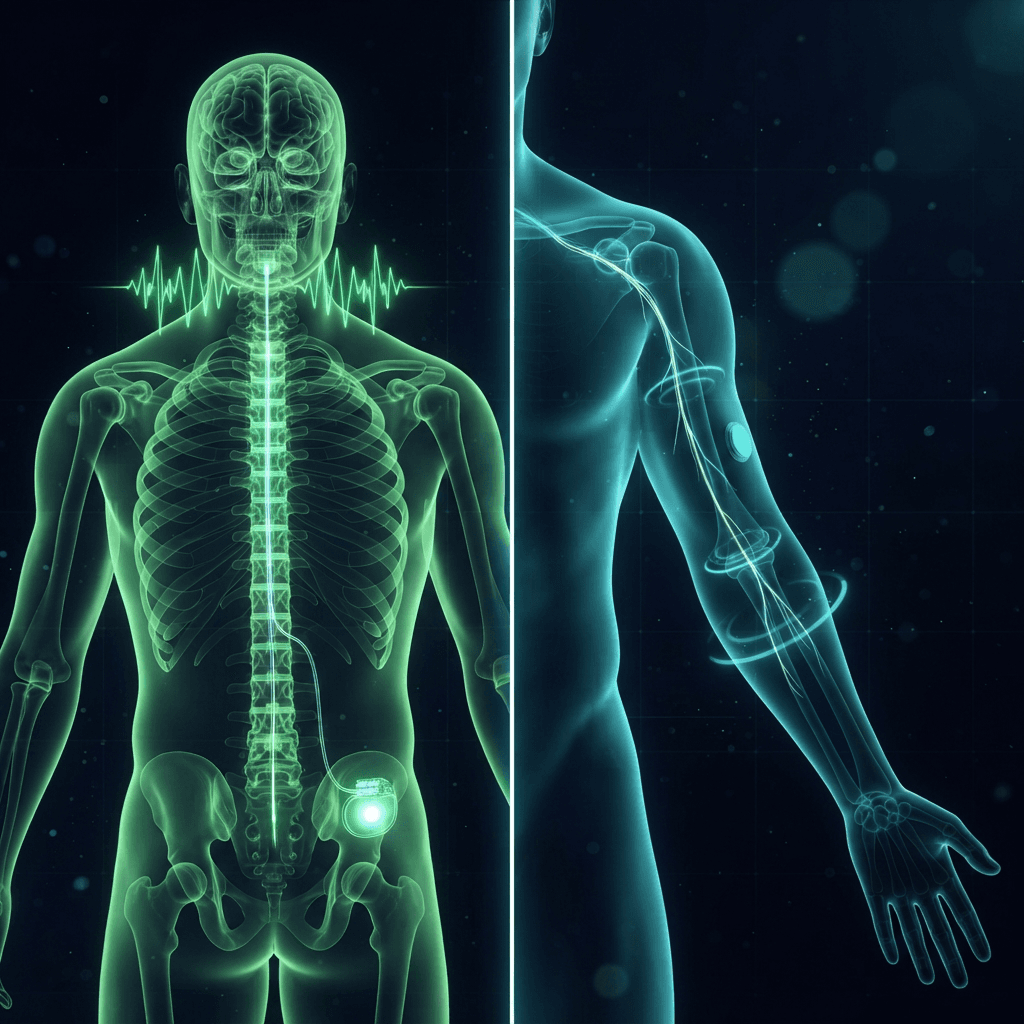
SCS vs. PNS: Side-by-Side Comparison
| Spinal Cord Stimulation | Peripheral Nerve Stimulation | |
|---|---|---|
| Target | Dorsal columns of the spinal cord | Peripheral nerves (limbs, head, face, trunk) |
| Best for | Chronic back and leg pain, pain after spine surgery, nerve-related pain | Focal nerve injuries, post-amputation pain, occipital neuralgia, peripheral neuropathy, CRPS, sports injuries |
| Trial period | About 1 week, with temporary leads and an external battery | 7 to 14 days, with an external stimulator |
| Trial benchmark | Commonly at least 50% relief before a permanent implant | Relief is confirmed during the trial before a permanent decision |
| Procedure | Outpatient or one-night stay; leads placed in the epidural space | Local anesthesia, optional light sedation, ultrasound or fluoroscopy guidance |
| Recovery | About 6 weeks limiting bending, twisting and lifting | Most patients resume light activity within 1 to 2 weeks |
| Reversible? | Yes | Yes |
| Opioid-free? | Yes | Yes |
| Battery | Up to about 11 years with optimal programming; rechargeable and non-rechargeable models | Replacement every 5 to 10 years |
Spinal Cord Stimulation (SCS)
SCS uses thin wires (leads) placed in the epidural space near the spinal cord, connected to a small battery-powered pulse generator under the skin. The pulses target the dorsal columns of the spinal cord and interrupt pain signals on their way to the brain.
The FDA first approved SCS in 1989.
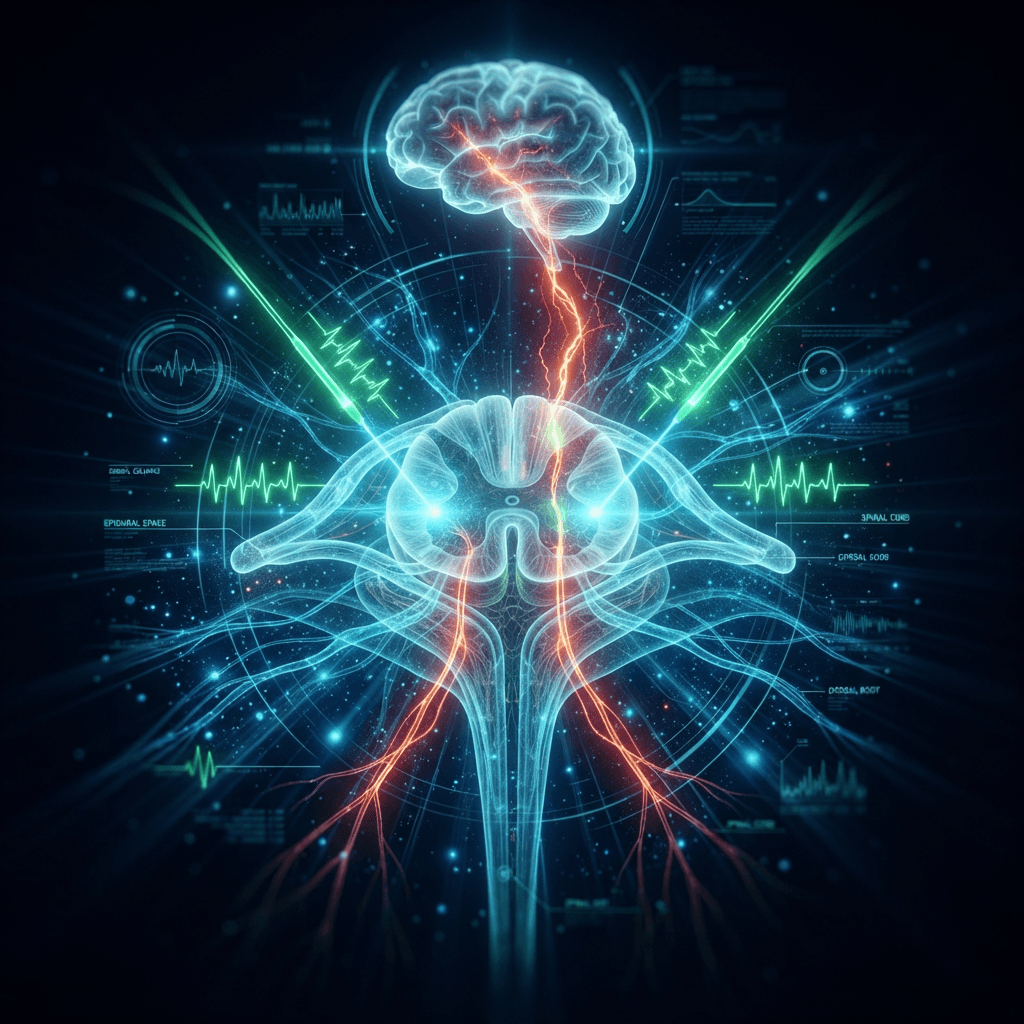
How SCS Works
A small implanted system that changes how pain signals travel to the brain.
Leads
Thin wires placed in the epidural space near the spinal cord.
Pulse generator
A small battery-powered generator placed under the skin and connected to the leads.
Dorsal column stimulation
Pulses target the dorsal columns of the spinal cord and interrupt pain signals on their way to the brain.
SCS Advantages
- Strong track record: in use since 1989, with published long-term success rates of about 47% to 74%, depending on the condition and how success is defined
- You can test it first: a temporary trial shows how the therapy works in daily life before a permanent implant is considered
- Drug-free and reversible: the system can be switched off or removed. In one randomized trial, SCS patients needed opioids less often than those who had repeat spine surgery
- Covers a broad area: working at the spinal cord, it can address back and leg pain together
- Multiple waveform options: conventional, high-frequency (10 kHz), burst and others let the team tailor therapy, including options with little or no tingling
- Widely covered: Medicare and many private insurers cover SCS when criteria are met, usually with prior authorization
SCS Disadvantages
- It is a surgical implant: leads go in the epidural space and a generator under the skin. This carries risks, and recovery means about six weeks of activity limits
- Hardware complications can happen: reported rates vary widely by study, including lead migration (roughly 1% to 23%), lead breakage (6% to 9%) and infection (about 2% to 5%). Many can be fixed with a minor revision; serious nerve injury is rare
- It does not work for everyone: success usually means at least 50% relief. In one real-world study, about 14% of devices were eventually removed
- It reduces pain; it rarely removes it: SCS changes how the nervous system carries the signal rather than fixing the source
- Screening is required: a psychological and medical evaluation comes first. Active infection, a bleeding disorder or untreated psychological conditions can delay or rule out SCS
- MRI limits: compatibility depends on the device model, so tell your radiologist you have a stimulator
Peripheral Nerve Stimulation (PNS)
PNS places a small electrode near a peripheral nerve outside the spinal canal, in the limbs, head, face or trunk. Placement is guided by ultrasound or fluoroscopy, and the pulses are delivered close to where the pain signal originates.
What Sets PNS Apart
The electrode sits next to the nerve involved, rather than at the spinal cord.
Imaging guidance helps place the lead precisely, using local anesthesia and optional light sedation.
A 7 to 14 day trial with an external stimulator lets you judge relief before a permanent decision.
PNS Advantages
- Targeted relief: PNS goes directly to the nerve causing the problem, a good fit for focal pain that spinal approaches are not suited to treat
- Minimally invasive: local anesthesia (optional light sedation) with ultrasound or fluoroscopy for precise lead placement
- Faster return to activity: most patients resume light activity within 1 to 2 weeks after a permanent implant
- Strong evidence for established uses: occipital neuralgia and post-amputation pain have strong support, and PNS is FDA-cleared for several indications
- An option when SCS is not feasible: for conditions like CRPS, PNS is used when spinal cord stimulation is not a good option
- Flexible approaches: named-nerve stimulation, peripheral nerve field stimulation for a painful region, and occipital nerve stimulation for headache disorders
- Reversible and testable: a 7 to 14 day trial lets you judge relief first, and the device can be removed
PNS Disadvantages
- Narrower coverage area: PNS is built for specific nerves or regions, so it is generally less suited to widespread or multi-area pain
- Evidence is still growing for some uses: evidence is moderate, rather than strong, for peripheral neuropathy and CRPS
- Still an implanted device: like any implant, it carries hardware and infection risks and needs follow-up and programming
- Battery replacement: expect a replacement procedure every 5 to 10 years
- Needs an identifiable target: success depends on finding the right nerve or painful region to stimulate
How to Choose Between SCS and PNS
There is no universal winner. The right option depends on the location and pattern of your pain, its cause, your prior treatments and your goals.
A trial is the best decision-making tool: a short test in real life shows what the therapy can do before you commit to a permanent implant.
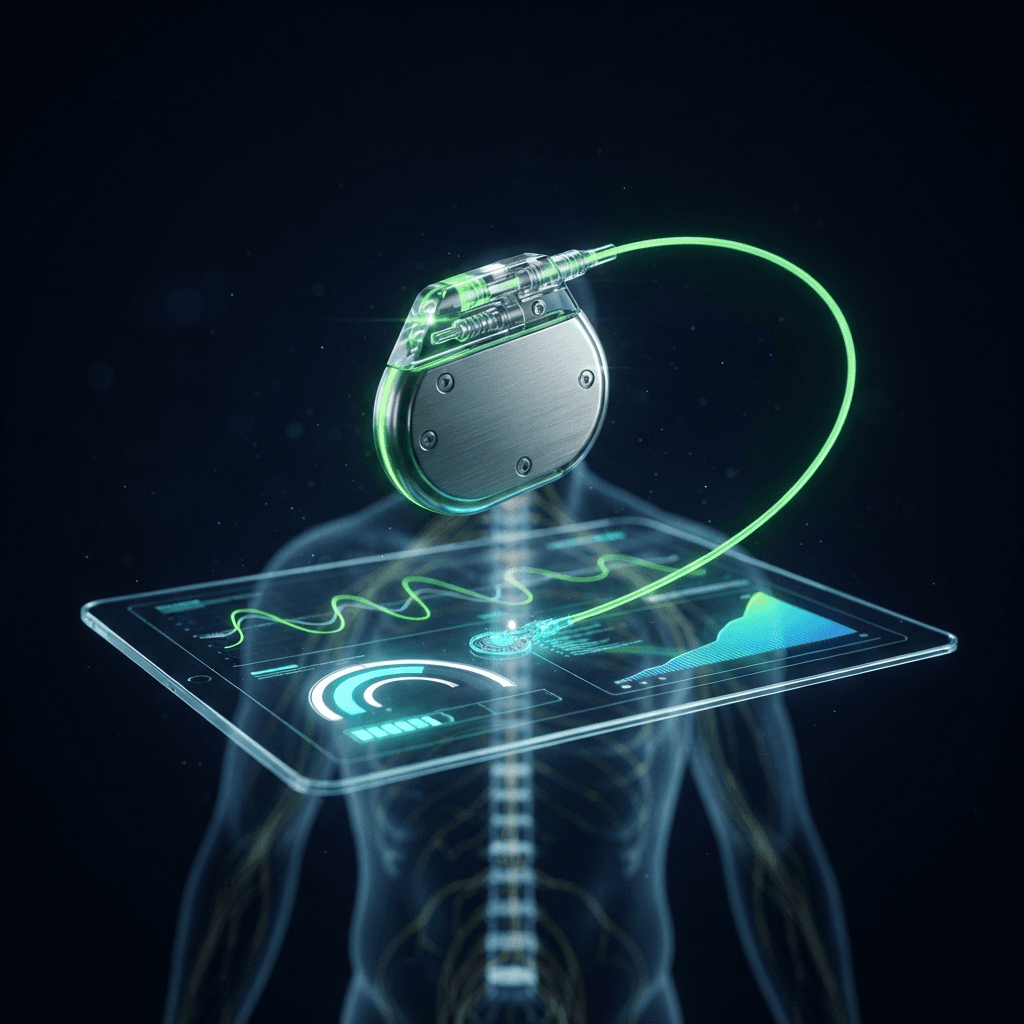
SCS is often considered for
- Long-lasting back and leg pain
- Burning or shooting nerve pain
- Persistent pain after spine surgery, especially when no surgery is expected to fix the cause
PNS is often considered for pain tied to a particular nerve or area
- Post-amputation pain
- Occipital neuralgia
- Post-surgical nerve pain
- A focal injury tied to a particular nerve or area
A close call: Sometimes the choice is close, and your physician may discuss both options or others, such as dorsal root ganglion stimulation, which targets a cluster of nerve cells and is often used for focal pain like foot or groin pain.
What Happens at Queens Pain Clinic
Your consultation starts with a conversation about your pain, not a device.
Review
We review your pain history, imaging and past treatments.
Recommendation
We advise whether neuromodulation makes sense for you and which type fits.
Trial
A short test in real life shows what the therapy can do before you commit to a permanent implant.
Find Out Which Option Fits Your Pain
We will review your pain history, imaging and past treatments, then recommend whether neuromodulation makes sense and which type fits you.
9701 66th Ave, Rego Park, NY 11374
Mon, Tue, Thu, Fri 9:00 am - 6:00 pm | Sun 9:00 am - 3:00 pm | Closed Wed and Sat
Medical disclaimer: This article is for general education and is not personal medical advice. Individual results vary. Please consult a qualified physician before beginning any treatment.